With the increasing awareness of the negative impacts of fossil fuels and carbon emissions, renewable energy has emerged as a promising alternative for power generation. The 2023 International Energy Agency (IEA) report highlights that approximately 800 million people lack access to electricity, while 3 billion people rely on wood or coal for cooking, leading to over 4 million deaths due to air pollution.
Renewable energy sources play a crucial role in addressing these challenges. However, the intermittent nature of renewable energy poses challenges in ensuring a stable power supply. Fluctuating electricity prices and mismatches between supply and demand require improved short-term production, demand, and forecasting strategies for both energy providers and consumers.
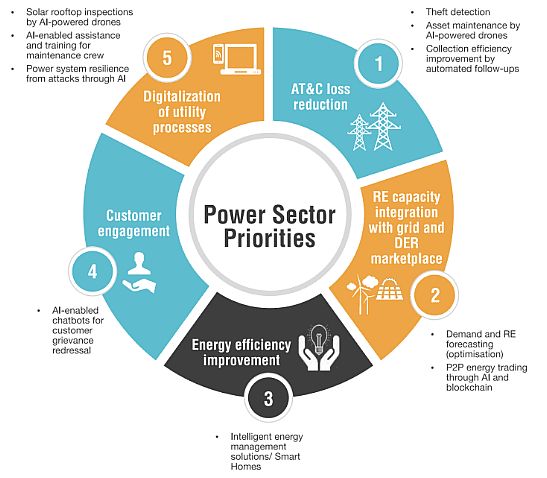
Computer vision technologies offer valuable insights from digital images and videos, enabling the identification of optimal locations for solar and wind energy plants. These methods enhance energy management, improve forecasting of renewable energy variables, and optimize sustainability practices.
Integration of Computer Vision in Renewable Energy
As the reliance on renewable energy sources grows, accurate forecasting of renewable energy generation becomes increasingly critical. Convolutional deep learning models have shown success in predicting weather patterns, aiding in the estimation of renewable energy output and other key variables influencing energy production.
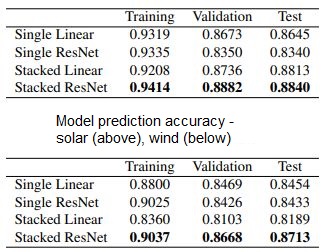
Deep learning models have demonstrated high accuracy levels, surpassing traditional machine learning techniques, particularly in predicting solar and wind locations. These models leverage multiple input frames over an extended period to enhance accuracy in forecasting.
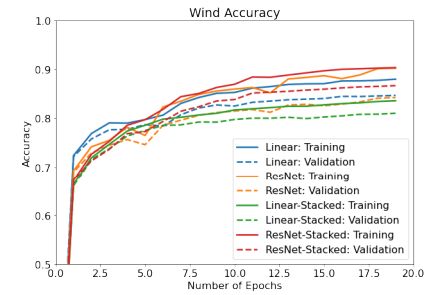
Saliency maps aid in validating specific areas influencing the model’s predictions, confirming the model’s ability to identify optimal sites for renewable energy production. By analyzing the output CNN layers, the computer vision model enhances its predictive capabilities for various energy types.
Utilizing Computer Vision for Solar Tracking
Accurately estimating sunlight availability and intensity is essential for solar units converting solar radiation into electricity. Solar radiation’s primary attribute is the Sun’s varying position in the sky, leading to daily and annual cycles due to the Earth’s rotation and orbit around the Sun.
To maximize solar radiation absorption, solar energy collectors require a sun tracking system (STS) to adjust their orientation with the Sun’s movement. The STS performs critical tasks such as calculating tracking setpoints, managing communication, diagnosing faults, controlling mechanisms, and making decisions in emergency scenarios.

Carballo et al. (2018) utilized STS to optimize the solar collector’s alignment with the Sun, leveraging computer-controlled active sun trackers based on date and time. These trackers calculate the solar position using solar equations that require inputs of time, date, and location.
Computer Vision Model for Solar Prediction
Researchers employed deep Convolutional neural networks (CNNs) for object localization and identification to predict solar energy production. Alexnet, a 25-layer CNN, trained on ImageNet data, was utilized to analyze images from solar tower systems in Almeria, identifying key objects such as the Sun, clouds, heliostats, and targets.
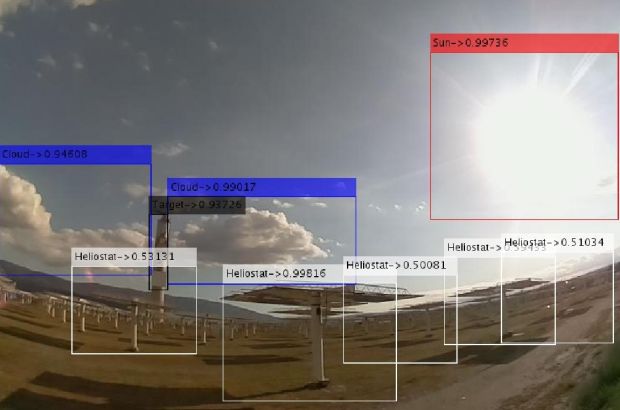
The new STS approach leverages computer vision to accurately track the Sun’s position, optimizing solar energy collection. By utilizing advanced CV techniques, this method offers a reliable and adaptable solution for solar tracking systems.
Furthermore, computer vision technologies offer significant advantages in identifying clouds, obstructions, shadows, air attenuation, and focused solar radiation, enhancing solar energy generation efficiency.
Estimation and Prediction of Renewable Energy
Bosma et al. (2022) proposed a system utilizing deep learning techniques in computer vision to predict weather patterns and estimate renewable energy generation accurately. By combining weather forecasting models with power estimation algorithms, they achieved improved accuracy in predicting solar and wind energy production.
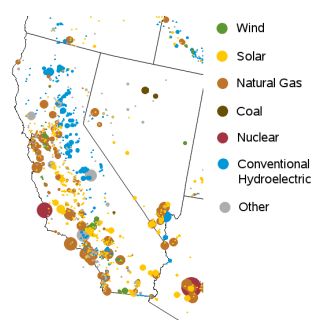
Their models leverage sequential weather maps to predict solar and wind power generation accurately. By training the models on publicly available weather datasets and utilizing advanced deep learning techniques, they achieved significant improvements in renewable energy estimation.
Computer vision technologies continue to revolutionize the renewable energy sector, offering innovative solutions for energy production, forecasting, and optimization. By harnessing the power of computer vision, we can enhance the efficiency and sustainability of renewable energy systems, paving the way for a greener future.
Frequently Asked Questions
Q1: What are the benefits of computer vision for renewable energy technologies?
Computer vision methods provide valuable insights from digital images and videos, aiding in the identification of optimal locations for solar and wind energy plants.
Q2: How can deep learning methods improve energy production from renewables?
Deep learning models, such as CNNs like ResNet and AlexNet, leverage past weather data to accurately predict the location of solar and wind power plants.
Q3: What data do these models use for training?
CV models for solar and wind activity prediction utilize publicly available weather datasets from sources like the National Oceanic and Atmospheric Administration (NOAA) and Copernicus.
Q4: How can computer vision assist in fault detection in solar panels and wind turbines?
Computer vision technologies enable remote monitoring of renewable infrastructure, detecting structural defects, system malfunctions, and potential hazards in solar panels and wind turbines.