Over the past few days, Bitcoin has experienced significant price fluctuations, leading the token to reach new lows. Despite a notable recovery, bearish signals continue to weigh on the token as the bears prevent the price from surpassing the $86,000 mark. While some anticipate a downward trend, historical patterns suggest that Bitcoin is on the verge of a major breakout.
Bitcoin’s price has been consolidating within a narrow range recently, indicating that bulls may be gathering strength for a strong rebound. Interestingly, the current consolidation pattern resembles that of 2021, raising the possibility of a robust upward trend if a rebound occurs.
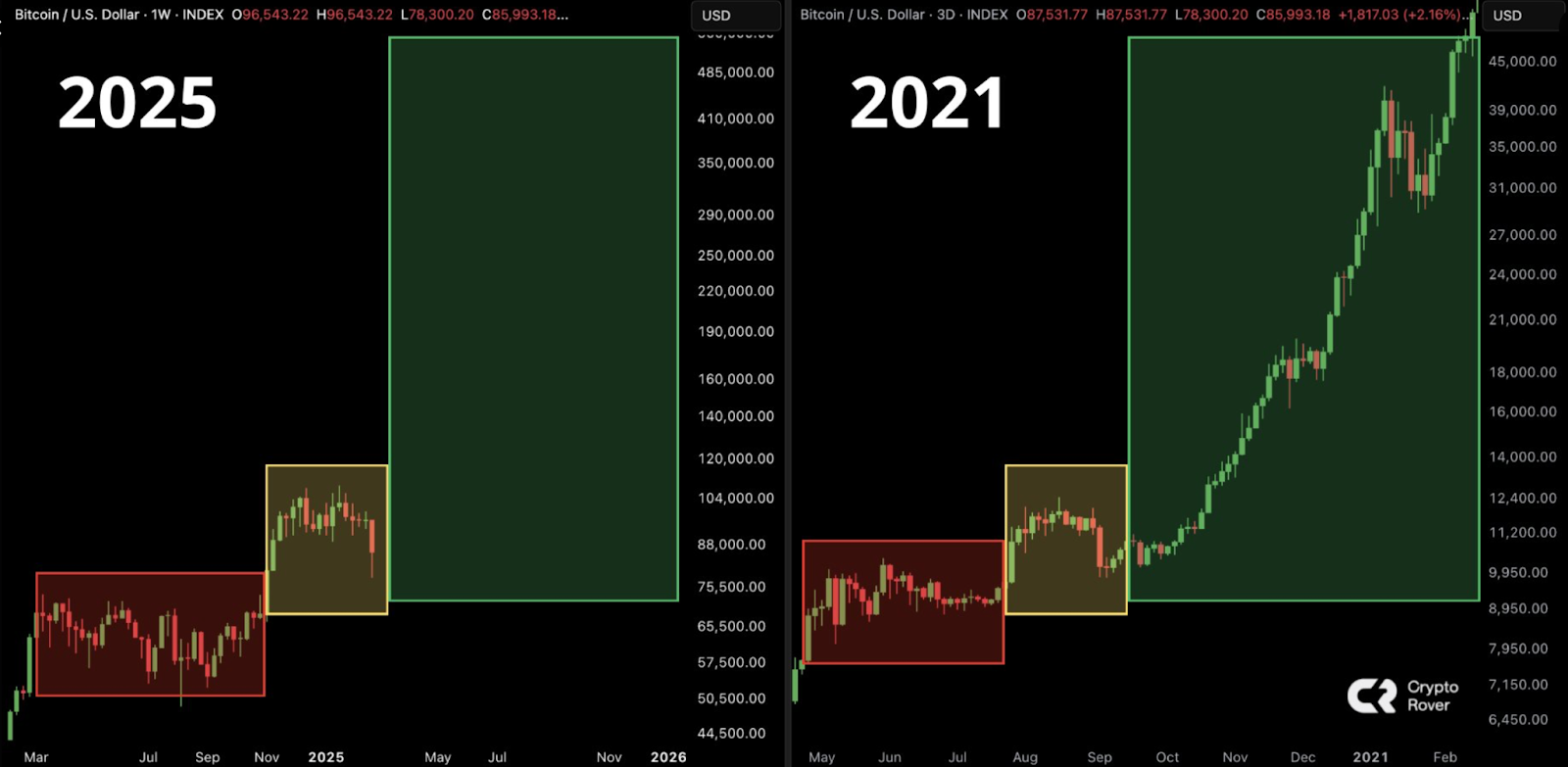
The chart above illustrates the similarity between the 2021 bull run and the current price action. Following a slight increase, the price has started to consolidate within a familiar range, suggesting a potential bull run akin to 2021. However, differences in volume and volatility could pose challenges to the rally.
Where’s the Bitcoin (BTC) Price Heading Next?
The recent price drop appears to have triggered liquidation of a significant number of long positions, reducing the likelihood of intense selling pressure in the near future. Bears seem more exhausted than bulls, diminishing concerns of a prolonged price decline. Short-term traders have accumulated over 35,000 BTC during the recent drop, preventing the price from falling below $82,000. Consequently, Bitcoin’s price is expected to remain relatively stable in the coming days.
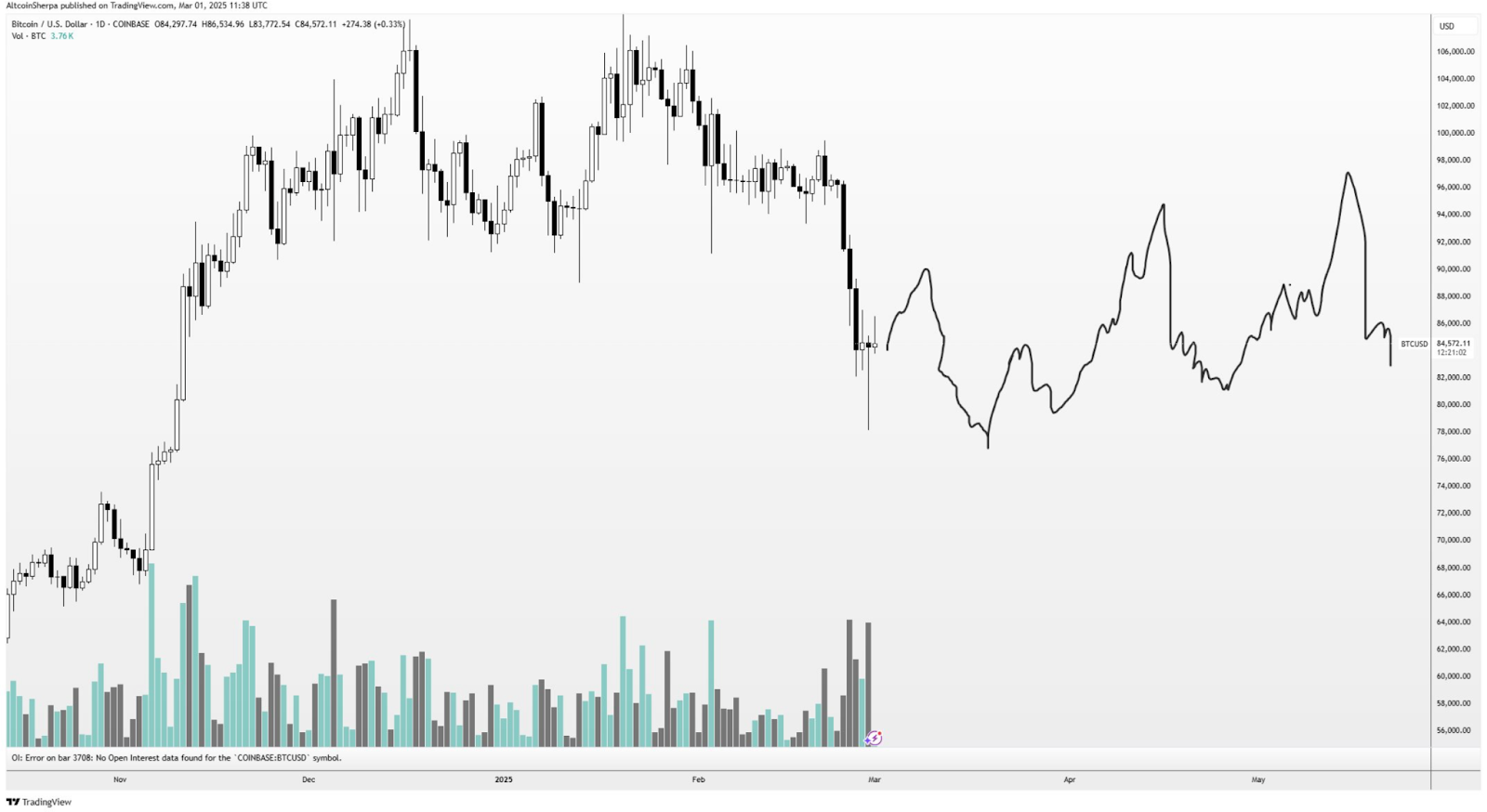
Renowned analyst Altcoin Sherpa predicts that Bitcoin’s price will continue to exhibit a sluggish trend for a while longer. The price is anticipated to stay within a defined range and gradually rise above $90,000 by the middle of the second quarter. Although the price may breach the $92,000 resistance level, bears could push it back below $85,000. This could be an opportune time to accumulate Bitcoin as the price is expected to follow an upward trajectory and reach new highs.