Bitcoin’s price is currently in the “Extreme Fear” zone once again. This has historically indicated great buying opportunities in the market. However, the current market selloff in 2026 is different from previous crashes.
In the past, moments of extreme fear such as the Mt. Gox crisis or the COVID panic have been followed by significant rallies. Institutional interest was low, government support was absent, and retail investors were panicking. But now, the market landscape has changed.
Extreme Fear Then and Now
In February 2026, Bitcoin’s price hit a low of $60,001.01 on Coinbase while sentiment remained in the “Extreme Fear” zone.
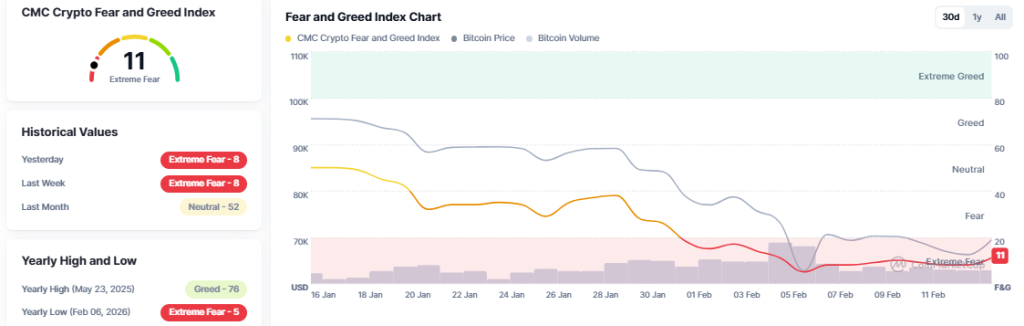
While historically extreme fear has signaled major bottoms in the Bitcoin price chart, the current market is influenced by institutional flows, ETF structures, and macro-driven liquidity cycles. Retail sentiment may not accurately reflect the market dynamics this time.
ETFs and Macro Pressure
Institutions scaling in at discounted levels could be causing the fear indicator to lag behind actual liquidation events. Macro-driven selloffs in broader markets can also impact Bitcoin’s price, especially during risk-off environments.
The most significant accumulation phases historically began when even dip-buyers were hesitant. We may be approaching that phase, but it’s uncertain whether it has fully played out yet.
Whale Activity Adds Pressure
Recent whale activity, such as a large deposit of 5,000 BTC into Binance, adds supply-side uncertainty to the market. While this doesn’t guarantee selling, it creates added pressure at a critical moment.
Extreme fear alone may not be a reliable timing tool for Bitcoin price predictions. Until forced liquidations ease and spot demand stabilizes without heavy reliance on sentiment indicators, the price could remain vulnerable to further declines below $60K.
Trust with CoinPedia:
CoinPedia has been providing accurate cryptocurrency and blockchain updates since 2017. Our content is created by experts following strict editorial guidelines. Every article is fact-checked for accuracy and reliability.
Investment Disclaimer:
Opinions shared in this article represent the author’s views. Please conduct your own research before making investment decisions. Neither the writer nor the publication takes responsibility for your financial choices.
Sponsored and Advertisements:
Our site may contain sponsored content and affiliate links. Advertisements are clearly marked, and our editorial content remains independent from our ad partners.