Naoris Protocol has officially launched its mainnet, unveiling a layer-1 blockchain that leverages post-quantum cryptography for enhanced transaction validation and network security. The mainnet is currently live with limited, invite-only access, allowing early adopters to operate validator nodes and process transactions.
As reported by Cointelegraph, the protocol incorporates cryptographic standards endorsed by the National Institute of Standards and Technology (NIST) to mitigate vulnerabilities present in existing blockchains, where conventional encryption methods may become susceptible over time.
Prior to the mainnet launch, the protocol’s test network successfully processed over 100 million transactions and detected millions of potential threats, demonstrating robust activity across numerous wallets and nodes.
The system is underpinned by a consensus mechanism known as distributed proof of security (dPoSec) to validate transactions across the network, while the NAORIS token plays a pivotal role in supporting network operations as the economic framework evolves.
The rollout commences with a select group of validators and partners, with plans to gradually expand access in subsequent phases.
The project boasts a lineup of advisors with extensive backgrounds in cybersecurity, government, and enterprise technology, and has garnered support from notable investors like Draper Associates.
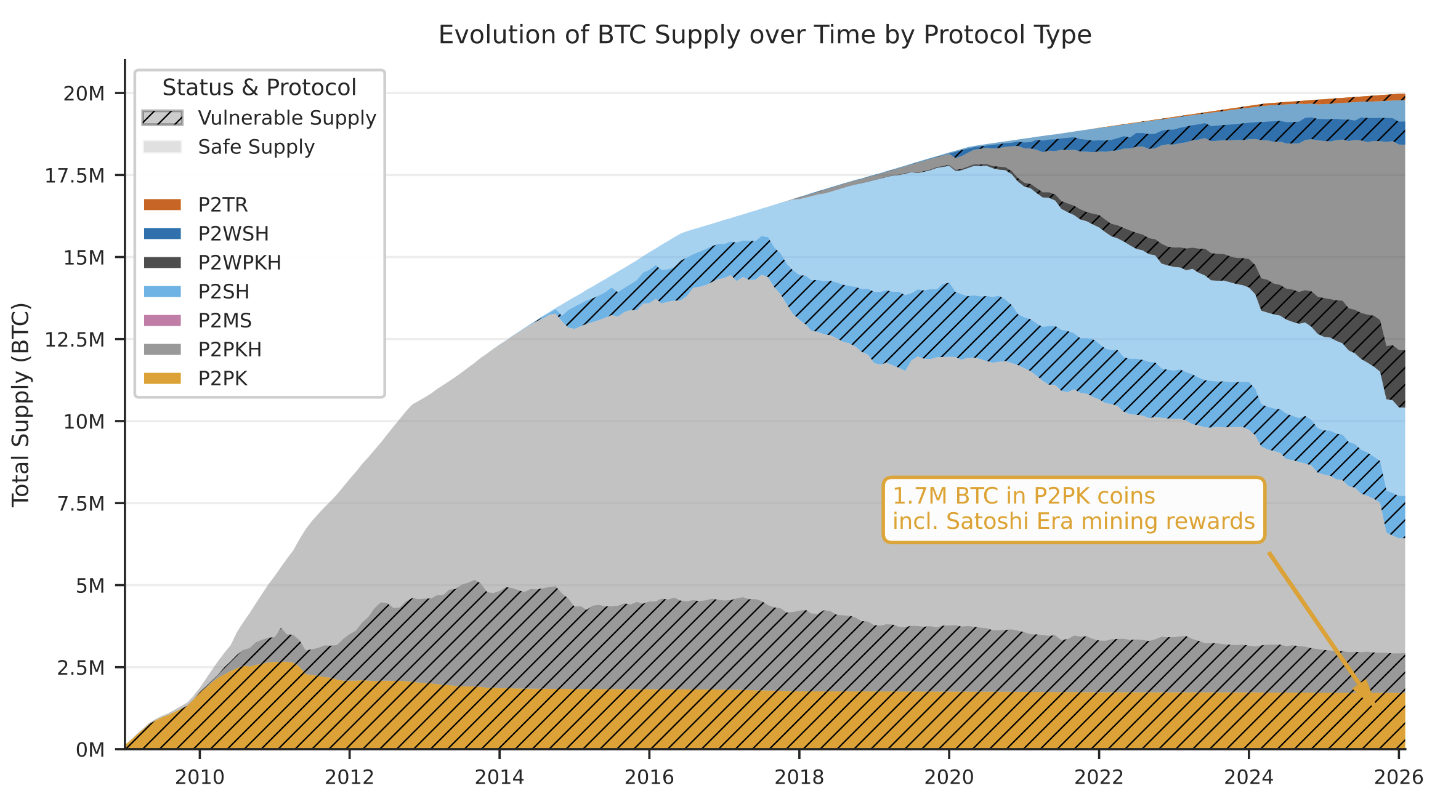
Related: Is $450B in Bitcoin vulnerable to the quantum threat? Analysts weigh in
New findings indicate quantum computing may materialize sooner than anticipated
The launch coincides with updated projections for quantum computing, a paradigm that leverages qubits and quantum states to process data in a fundamentally different manner compared to classical computers, prompting a shift away from existing cryptographic norms.
A recent study by Google suggests that quantum computers could require significantly fewer resources than previously estimated to compromise blockchain encryption. The research posits that fewer than 500,000 physical qubits could potentially crack the encryption protecting Bitcoin (BTC) and Ether (ETH), marking a substantial reduction from earlier assessments.
These findings underscore an accelerated timeline for quantum risks, with Ethereum Foundation researcher Justin Drake estimating a 10% likelihood of a quantum computer retrieving a private key by 2032.
Researchers at the California Institute of Technology collaborating with Oratomic have arrived at similar conclusions, highlighting advancements in error correction that could reduce the requisite number of qubits for stable computations to 10,000 to 20,000, a stark deviation from previous assumptions of millions.
Based on these advancements, a practical quantum computer could emerge as early as 2030, signaling a proactive response from blockchain developers. Solana ecosystem developers recently introduced a quantum-resistant vault utilizing hash-based signatures to enhance key security, while the Ethereum Foundation unveiled plans for a “Post-Quantum Ethereum” hub to revamp the network’s cryptography with protocol-level adjustments slated for completion by 2029.
Magazine: A newbie’s guide to surviving crypto winter