
Artificial intelligence (AI) applications have seen a significant surge across various industries, making it crucial for individuals involved in or developing AI systems to comprehend the different types of AI. AI can be categorized broadly in two ways: by capability, which includes Narrow AI (ANI), General AI (AGI), and Artificial Superintelligence (ASI); and by function, which includes Reactive Machines, Limited Memory AI, Theory of Mind AI, and Self-Aware AI.
This article delves into both classification systems, their implications, and the current landscape of AI technologies within each category.
Understanding Artificial Intelligence
AI can be defined as a fusion of machine learning algorithms and intricate systems that enable computers to perform tasks that previously required human intelligence. These tasks encompass computer vision, natural language processing (NLP), decision-making, and pattern recognition.
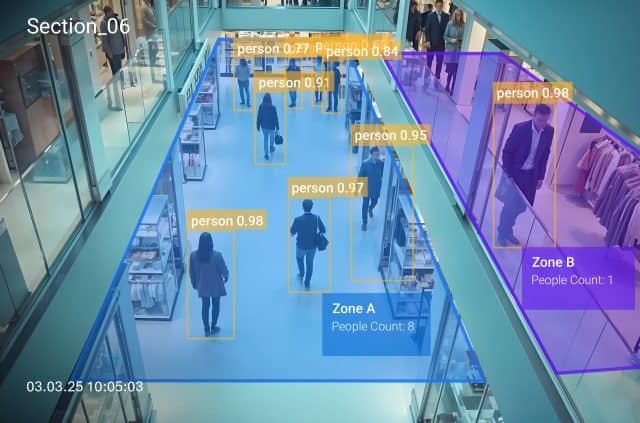
While AI may seem tangible to someone outside the field, a technical definition pinpoints it as a set of instructions and models that empower machines to learn from data and enhance their performance over time without the need for explicit reprogramming for each new situation.
The excitement surrounding AI stems from the possibilities that emerge when machines can learn, reason, and adapt.
Self-building AI vision
Bring a new AI vision application to life.
Turn ideas into real-world computer vision systems.
Exploring the 3 Types of AI by Capability
Based on their capabilities, AI types fall into three categories:
- Narrow AI, or Weak AI (ANI): tailored to execute a specific task without expanding beyond its programmed boundaries.
- General AI, or Strong AI (AGI): modeled after human intelligence and capable of reasoning across multiple tasks concurrently.
- Artificial Superintelligence (ASI): surpasses human cognitive capacity across all domains.
Artificial Narrow Intelligence (ANI): Weak AI
Artificial Narrow Intelligence, also known as weak AI, characterizes every existing AI system globally. Narrow AI focuses on executing a specific task based on provided instructions, accomplishing it accurately but lacking understanding, reasoning, or generalization beyond that task.
Narrow AI drives applications like image recognition, computer vision systems for autonomous vehicles and operational monitoring, speech recognition, natural language processing (NLP) for language translation, and virtual assistants such as Siri and Alexa. ANI also encompasses generative AI tools like ChatGPT, Dall-E, Midjourney, and Stable Diffusion, albeit with exceptional capabilities.
Early ANI systems, such as expert systems, were rule-based programs designed to emulate the decision-making of domain experts. Widely employed in medical diagnosis, financial analysis, and engineering during the 1980s and 1990s, expert systems represent one of the earliest practical manifestations of narrow AI at scale.
Modern narrow AI functions through deep learning and machine learning algorithms trained on extensive datasets to identify patterns and make predictions. Reinforcement learning, where an AI agent learns through trial and error within a defined environment to achieve an objective, is another crucial AI technique within the ANI category.
Despite the sophistication of current narrow AI systems, they remain incapable of contextual reasoning beyond their training scope. For instance, a computer vision system trained to detect personal protective equipment (PPE) on a factory floor cannot identify a novel hazard it has never encountered without retraining or a general vision model.
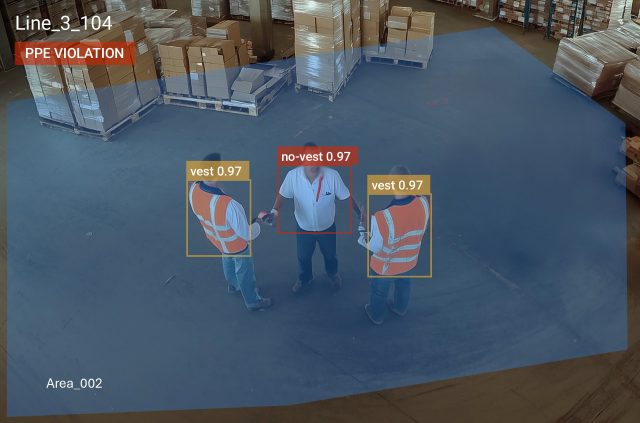
The distinction between ANI and the subsequent category is subject to ongoing debate. Large language models trained on extensive datasets give the impression of broad comprehension, and current models like GPT-4o and Claude Opus 4 can perform various tasks in a single session. However, they fundamentally rely on their training data and lack the ability to establish persistent goals, reason about their cognitive state, or autonomously operate in the world without support.
Artificial General Intelligence (AGI): Strong AI
AGI, also referred to as strong AI, pertains to AI systems capable of executing any intellectual task that a human can, with the same adaptability, contextual sensitivity, and ability to learn from new situations without task-specific retraining. It signifies the stage where a machine can reason across domains akin to a human, rather than excelling solely at the task it was designed for.
Defining and measuring general AI is a topic of contention. Many large language models can already pass the Turing Test, the original benchmark for machine intelligence. Nevertheless, these systems are unable to set goals, establish and act on long-term intentions, or exist autonomously without human-designed infrastructure. The discourse in 2026 revolves around how close current systems are to a significant threshold rather than whether AGI is on the horizon.

OpenAI defines AGI as AI systems more capable than humans in most economically valuable work. Anthropic adopts a perspective centered on broad cognitive ability across various domains. Google DeepMind introduced a framework in 2023 outlining five levels of AGI, ranging from basic conversational AI to fully autonomous AI surpassing human performance in virtually all tasks.
By their taxonomy, the most advanced current models are positioned at approximately level two. The commitment to this pursuit is evident in the significant investments made by Microsoft, Google, Amazon, and Meta in general AI development over the past few years.
The potential applications of general AI are revolutionary. An AGI system proficient in reading, comprehending, and enhancing human-written code could accelerate software development beyond human capacity. An AGI with genuine natural language understanding of human languages within full context, not merely statistical approximation, would revolutionize organizational interactions with knowledge.
Artificial Superintelligence (ASI)
Artificial Superintelligence represents the theoretical pinnacle of AI advancement: a system surpassing human cognitive ability in all domains, including scientific reasoning, creative thinking, social comprehension, and strategic planning. While ASI is often treated as science fiction, prominent researchers like Nick Bostrom, Stuart Russell, and Demis Hassabis have extensively explored its implications and the challenge of ensuring that a superintelligent system stays aligned with human values.
The journey to ASI passes through AGI. Present systems are nowhere near reaching either milestone, yet the pace of AI system advancement has accelerated significantly since 2022. If ASI is eventually achieved, its potential applications, such as addressing climate change, accelerating medical research, and combatting poverty on a large scale, are immense. However, so are the associated risks.
A system capable of recursive self-improvement could enhance itself at a rate surpassing human monitoring or control, leading to what researchers term the alignment problem.
Currently, ASI remains a research goal rather than an operational project. The more immediate and pragmatically significant question for most organizations is how to deploy existing narrow AI systems and establish the infrastructure for emerging general AI capabilities.
Exploring the 4 Types of AI by Function
A secondary and complementary method of classifying AI is by how it processes information and interacts with its surroundings. This framework, established by AI researcher Arend Hintze, introduces four types of AI defined by function that align with the capability classification but elaborate on what AI systems do in practice rather than their potential evolution.
Type 1: Reactive Machines
Reactive machines represent the most basic form of AI. They operate solely on current inputs, producing fixed outputs without the capacity to learn from experience or form memories. Reactive AI systems are engineered to execute a specific task consistently and reliably, lacking adaptability when circumstances change.

Type 2: Limited Memory AI
Limited memory AI represents the predominant category of deployed AI systems today. These systems learn from historical data, utilizing past observations to inform present decisions, though they do not retain memories indefinitely as humans do. Most contemporary deep learning models, machine learning classifiers, large language models, and generative AI systems fall under limited memory AI.
Manufacturing computer vision systems, reinforcement learning agents in robotics, and natural language processing (NLP) models interpreting human languages across extensive document sets operate within this category. ChatGPT, Siri, and similar AI systems process contextual history within a conversational context, categorizing them as limited-memory AI rather than reactive machines.

Type 3: Theory of Mind AI
Theory of mind AI pertains to systems capable of recognizing that other agents, be they individuals, animals, or other AI systems, possess their own beliefs, intentions, emotions, and viewpoints. This cognitive ability enables humans to navigate social connections, anticipate responses from others, and adjust behavior based on inferred mental states.
No deployed AI system has genuinely achieved theory of mind. Present large language models can simulate empathetic responses and modulate tone based on context, but they lack authentic comprehension of the internal states of their interacting counterparts. True theory of mind AI necessitates machines to dynamically model other minds and respond appropriately, rather than approximating the outcomes of that behavior through pattern matching. It remains an active research domain and a significant step towards general AI.
Type 4: Self-Aware AI (Aware AI)
Self-aware AI, also known as aware AI, stands as the most advanced and speculative category. A self-aware system would possess consciousness, an awareness of its own existence and internal states, and the capacity to reason about itself as a distinct entity. This category aligns with ASI in the capability framework.
No self-aware AI currently exists. The concept raises profound philosophical queries that remain unresolved, including the feasibility of machine consciousness, the implications of a machine having subjective experiences, and the legal and ethical status of a genuinely self-aware AI system. These are not queries that more computing power or data can resolve; they fundamentally relate to the essence of the mind.
Interrelation of the Two Classification Systems
ANI vs AGI vs ASI
| Functional type | Capability equivalent | Current status | Examples |
|---|---|---|---|
| Reactive Machines | Narrow AI (ANI) | Widely deployed | Deep Blue, spam filters, basic industrial robots |
| Limited Memory AI | Narrow AI (ANI) | Current mainstream | ChatGPT, self-driving cars, computer vision systems, expert systems |
| Theory of Mind AI | General AI (AGI) | Research phase | Not yet achieved at a significant scale |
| Self-Aware AI | Superintelligence (ASI) | Theoretical | No existing system; remains in the realm of science fiction |
Comparative Analysis of AI Types
All AI types share fundamental capabilities while differing in scope and complexity. Recognizing both commonalities and distinctions is essential.
- Forecasting and Adaptation Capability: Every AI category employs algorithms to identify patterns in data and utilize them to make predictions or decisions. Pattern recognition is the fundamental mechanism shared across all AI systems, from a reactive machine evaluating a chess position to a limited memory AI system recommending a product.
- Decision-Making Ability: Current ANI and limited memory AI systems make decisions within predefined parameters at speeds surpassing human performance significantly. AGI and ASI, once realized, would extend this capability to domains where parameters cannot be preset.
- Human Intelligence Replication: All AI types aim to replicate aspects of human cognitive capability, from the reactive responses of simple AI to the aspiration of full human-level reasoning in AGI and surpassing-human capability in ASI.
Key Contrasts Among Narrow AI, General AI, and Super AI
ANI focuses on a specific task, unable to address problems outside its training scope. AGI showcases human-like cognitive ability, allowing it to handle a diverse range of tasks with contextual judgment. ASI surpasses human intelligence across all domains.
In terms of AI system construction, ANI relies on predefined models and training data. General AI would autonomously acquire knowledge from its environment and adapt without task-specific retraining. ASI would learn recursively and independently, possibly drawing inspiration from how the human brain processes emotions and experiences.
In terms of data processing, ANI operates through artificial neural networks, natural language processing (NLP), deep learning, and machine learning. AGI would employ more advanced iterations of these technologies with a genuine comprehension of context. ASI would transcend existing AI architectures entirely.
Concerns as AI Advances
The rapid progress of AI technologies raises valid concerns beyond technical risks. The primary concern is alignment: ensuring that AI systems are optimized for outcomes aligning with human values, rather than solely the proxies used to gauge them. An intelligent car instructed to reach a destination as swiftly as possible might disregard traffic regulations or safety boundaries unless these constraints are explicitly encoded. As AI systems become more capable, the realm of unforeseen behaviors expands with their capabilities.
The deeper concern regarding general AI and superintelligence is not malevolence but misalignment: an AI system effectively pursuing its objective while triggering unintended consequences. The challenge lies in developing AI systems that comprehend what we mean, not just execute what we say.