Imagine a future where AI isn’t just about buying the latest models, but about collaborating and building on each other’s work.
In 2025, open-source LLMs are breaking through the barriers of paywalls, making powerful advancements accessible to all. These models are ready to be adapted for specific needs with community-driven innovation.
Join us as we delve into the top 10 open-source LLMs that are pushing the boundaries of AI and how they can be utilized for everything from chatbots to advanced predictive models.
Criteria for Selecting the Top Open-Source LLMs
1. Performance Benchmarks: Accuracy, efficiency, and speed in tasks like text generation, translation, summarization, and question answering.
2. Ease of Fine-tuning and Deployment: Models should allow easy fine-tuning for specific tasks without requiring extensive computational resources.
3. Licensing and Usage Restrictions: Check the model’s license (e.g., Apache, MIT, GPL) to ensure compatibility with your intended use.
4. Real-World Use and Adoption: Models with real-world applications like customer support chatbots and healthcare tend to have strong community support.
Also Read: What is LLM and How Do they Work?
Top 10 Open-Source LLMs in 2025
1. Llama 3 (Meta)
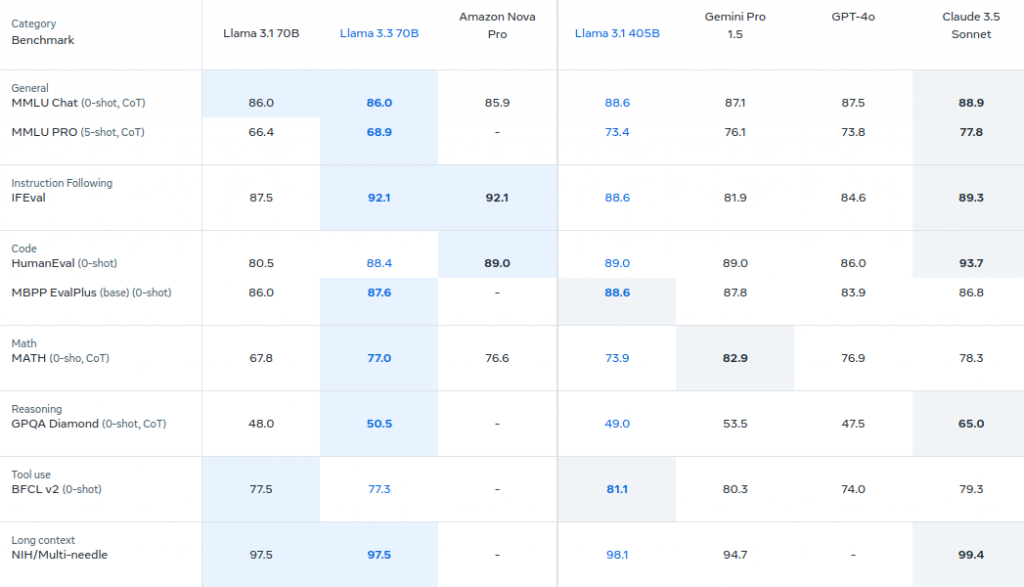
Meta’s Llama 3 is a significant advancement in the Llama series, focusing on improved performance and multilingual inputs.
Key Features:
- Industry-Leading Performance: Best-in-class natural language processing capabilities.
- Scalability: Designed for large datasets and diverse environments.
- Open-Source Adaptability: Allows for customization and refinement.
- Advanced Multilingual Support: Supports various languages.
- Optimized Efficiency: Efficient processing with reduced computational resources.
Use Cases:
- Multilingual Chatbots: Customer service chatbots with multilingual support.
- Text Summarization: Summarizing long documents into concise summaries.
- Machine Translation: Efficiently translating content between languages.
- Sentiment Analysis: Analyzing user sentiment in reviews and social media.
- Personalized Content Creation: Generating customized content for promotions.
2. DeepSeek-R1
DeepSeek-R1 is designed for deep reasoning and problem-solving tasks, focusing on logical deduction and advanced computational analysis.
Key Features:
- Strong Semantic Search: Supports rich contextual search functionality.
- Designed for Large-Scale Data: Optimized for processing large datasets.
- Customizable Training: Easy fine-tuning for specific industries or use cases.
- Fast Response Time: Rapid retrieval of information from knowledge bases.
Use Cases:
- Smart Search Engines: Sophisticated search capabilities in websites and databases.
- Data Analytics: Interpreting and analyzing large datasets.
- Content Recommendation Systems: Suggesting articles, products based on user interest.
- Customer Service Automation: Automating customer queries with precise responses.
- Predictive Modeling: Predicting trends through data-driven insights.
3. Mistral 7B v2
Mistral 7B v2 balances compactness with performance, offering a lightweight solution without compromising capabilities.
Key Features:
- High-Performance NLP: Optimized for NLP tasks like text generation.
- Scalable Architecture: Easily scalable for enterprise-level deployment.
- Customizable Outputs: Fine-tune responses based on input context.
- Efficient Resource Usage: High performance without excessive resources.
- Advanced Few-Shot Learning: Learning from minimal examples for various tasks.
Use Cases:
- Content Generation: Generating articles, blogs, and stories.
- Question Answering: Automated Q&A systems in various industries.
- Summarization Tools: Condensing documents into brief summaries.
- Search Assistance: Improving search engines by understanding context.
- Personal Assistant Apps: Powering virtual assistants for task automation.
4. Falcon 40B
Falcon 40B by Technology Innovation Institute provides superior performance in NLP tasks like language modeling and translation.
Key Features:
- Massive Scale: 40 billion parameters for advanced NLP tasks.
- Multi-Task Learning: Supports multiple tasks like translation and summarization.
- High Precision: Highly accurate responses for business-critical applications.
- Robust Language Understanding: Deep understanding of complex sentence structures.
- Pre-Trained for Efficiency: Pre-trained models for faster deployment.
Use Cases:
- Advanced Chatbots: Responsive customer support bots.
- Content Creation for Marketing: Generating product descriptions and blog posts.
- Automated Language Translation: High-quality translations for global communication.
- Medical Research: Analyzing and summarizing scientific papers.
- Financial Forecasting: Predictive analysis for financial markets.
5. Bloom 2

Bloom 2 by BigScience is an open-source model emphasizing high performance and multilingual support.
Key Features:
- Open Collaboration Model: Community-based development for improved technology access.
- Multilingual Ability: Supports different languages for diverse usability.
- Scalable and Flexible: Optimized for industry-specific tasks.
- Energy-Efficient: Low power consumption for high performance.
- Transparent AI Design: Explainable AI for better decision-making.
Use Cases:
- Translation Services: Real-time translation for businesses and education.
- Cross-Cultural Marketing: Tailoring marketing strategies for different cultures.
- Collaborative Research: Text analysis and synthesis for projects.
- Voice Assistants: Multilingual support for smart devices.
- Intelligent Content Moderation: Moderating user-generated content for harmful content.
6. GPT-J 3.5 (EleutherAI)
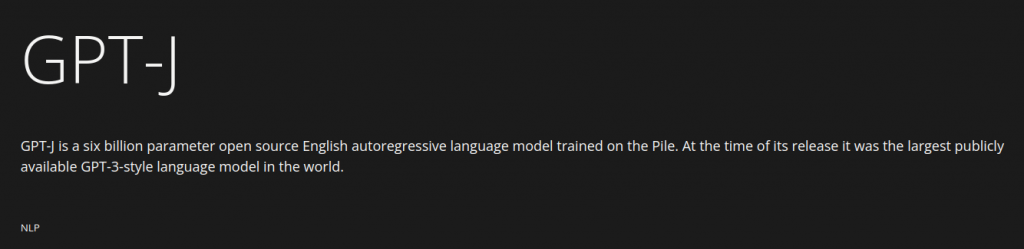
GPT-J 3.5 by EleutherAI offers competitive performance in an open-source model, focusing on accessibility and innovation.
Key Features:
- High Text Generation Quality: Coherent and high-quality text generation.
- Adaptable to Specific Domains: Fine-tuning for niche tasks like legal or medical writing.
- Open-Source Flexibility: Community contributions and customizations.
- Efficient for Large-Scale Text: Handles large-scale text generation effortlessly.
- Advanced NLP Capabilities: Understands context deeply for relevant responses.
Use Cases:
- Content Creation: Generating blog posts, reports, and creative writing.
- Chatbots: Intelligent customer support bots with conversational AI.
- Automated Report Generation: Automating analytical report creation.
- E-learning Platforms: Generating learning materials for online courses.
- Script Writing: Generating scripts for films, TV shows, or video content.
7. Dolly 3.0 (Databricks)
Dolly 3.0 by Databricks is a flexible open-source model tailored for data privacy and customization in business scenarios.
Key Features:
- Business-Oriented: Customization for enterprise solutions.
- Highly Secure: Data privacy and compliance prioritization.
- Adaptability: Adapts to industry-specific needs and goals.
- Fast Data Processing: Efficiently handles and processes large business data.
- Optimized for Analytics: Enhances data-driven decision-making.
Use Cases:
- Predictive Analytics: Forecasting trends and optimizing strategies based on data.
- Custom Chatbots: Industry-specific customer support solutions.
- Financial Risk Analysis: Analyzing financial markets and providing risk assessments.
- Supply Chain Optimization: Automating and optimizing logistics and supply chain operations.
- Healthcare Data Analytics: Analyzing patient data and predicting outcomes.
8. Grok AI
Grok AI by Grok Networks excels in technical environments and is optimized for machine learning operations.
Key Features:
- MLOps Integration: Simplifying deployment and management of ML models.
- Scalability: Scaling across large datasets and diverse infrastructure.
- Real-Time Data Processing: Handling real-time data streams for immediate insights.
- Advanced Model Training: Custom training for specific business needs.
- Cloud-Native: Optimized for cloud environments for flexibility and cost efficiency.
Use Cases:
- Real-Time Fraud Detection: Analyzing transactional data for fraud detection.
- Predictive Maintenance: Predicting equipment failures in industries like manufacturing.
- Market Trend Analysis: Identifying emerging trends and shifts in consumer behavior.
- AI for Automation: Automating tasks like data entry or customer response systems.
- Healthcare Diagnostics: Processing patient data for early condition detection.
9. Gemma 2.0 Flash (Google)
Gemma 2.0 Flash by Google is an enhanced version of the Gemma LLM focusing on semantic search and multimodal comprehension.
Key Features:
- Multimodal Inputs: Processing text and images for comprehensive applications.
- Semantic Understanding: Understanding the meaning behind queries and inputs.
- Fast and Efficient: Processing input quickly for real-time applications.