Red Hat and AMD Collaborate to Enhance Support for AI Workloads and Modernise Virtualised Infrastructure
Red Hat and AMD have deepened their partnership to enhance support for AI workloads and modernise virtualised infrastructure. Their aim is to provide more options for organisations facing increasing data demands and a mix of applications running on both on-premise and cloud systems.
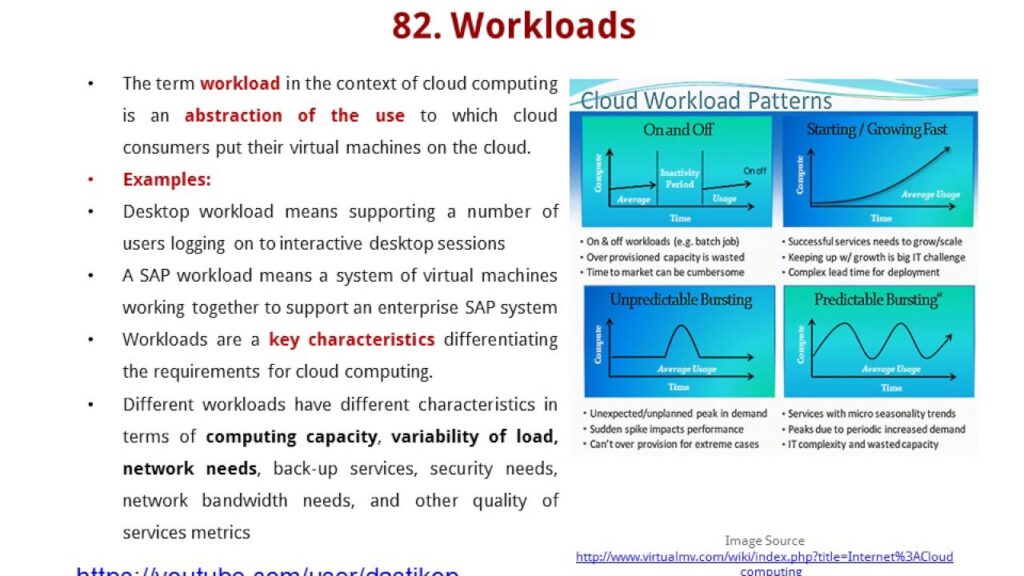
With the rise of AI usage, the need for data centres that can accommodate it has also increased. However, many data centres are still primarily tailored for traditional IT workloads, leaving limited capacity for AI. To address this gap, Red Hat is combining its open source software with AMD’s processors and GPUs to offer a more balanced and efficient foundation for AI and virtual machines.
A crucial aspect of this collaboration is enabling AMD Instinct GPUs to integrate with Red Hat OpenShift AI. This integration provides users with the necessary computational power for AI tasks while maintaining resource efficiency. Red Hat and AMD conducted tests with Instinct MI300X GPUs on Red Hat Enterprise Linux AI within Microsoft Azure’s ND MI300X v5 VMs, demonstrating the GPUs’ ability to support both small and large language models without the need to distribute workloads across multiple virtual machines, thereby reducing costs and complexity.
Both companies are actively engaged in the vLLM community to enhance AI inference. By contributing updates such as kernel optimizations and communication enhancements, Red Hat and AMD aim to accelerate multi-GPU workloads and boost efficiency. This collaborative effort also includes better support for quantized and dense AI models running on AMD hardware.
As part of their upstream contributions, AMD Instinct GPUs will support the Red Hat AI Inference Server, a validated version of vLLM ready for enterprise use. Red Hat is committed to enabling customers to run AI models on AMD hardware without requiring custom configurations, providing a reliable way to deploy open source AI models on GPUs optimized for the task.
In addition to GPUs, AMD’s EPYC CPUs play a critical role in hosting GPU-powered systems. These CPUs deliver robust performance across various workloads, including AI training and inference, while also enhancing the return on investment from GPU servers.
Besides AI, the partnership also supports a shift in how businesses manage virtual machines. Red Hat OpenShift Virtualization, running on AMD EPYC processors, enables organizations to transition VM-based applications to a cloud-native platform. This feature empowers IT teams to manage both VMs and containers from a unified environment, whether deployed in a data centre or across public cloud platforms.
This setup can enhance infrastructure utilization and reduce overhead. OpenShift Virtualization supports deployment on major server brands like Dell, HPE, and Lenovo, simplifying legacy infrastructure, cutting costs, and creating space for new workloads like AI.
By facilitating the operation of VMs and AI workloads on the same infrastructure, Red Hat and AMD are helping businesses optimize their existing systems while preparing for future demands.
Ashesh Badani, Senior Vice President and Chief Product Officer at Red Hat, stated, “Fully realizing the benefits of AI requires organizations to have the flexibility to optimize their IT footprint for scaling demand. Our expanded collaboration with AMD broadens the range of options for organizations looking to prepare their IT environments for an evolving future—from modernizing existing investments on a high-performing CPU architecture and virtualization platform to gearing up for production AI with next-gen hardware accelerators and open source AI technologies.”
Philip Guido, Executive Vice President and Chief Commercial Officer at AMD, commented, “As enterprise customer workloads become more diverse and demanding, scalable solutions are essential. By combining Red Hat’s leading open source platforms with AMD Instinct GPUs and EPYC CPUs, we are delivering the performance and efficiency customers need to accelerate AI, virtualization, and hybrid-cloud innovation.”
(Photo by Unsplash)
Read more: Red Hat boosts enterprise AI across the hybrid cloud with Red Hat AI
For insights on cybersecurity and cloud technology from industry experts, explore Cyber Security & Cloud Expo events in Amsterdam, California, and London.
Discover upcoming enterprise technology events and webinars powered by TechForge here.