Computer vision is no longer just a tool for innovation teams – it has evolved into a frontline technology that drives real value across safety, quality, and efficiency in operations.
Our recent webinar series delves into the world of computer vision (also known as AI Vision), starting with the second webinar titled ‘High-impact computer vision in supply chain: real-world applications and ROI’ led by our expert Technical Account Manager, Abi Anderson.
- Exploring the timeliness of computer vision
- Understanding the basics of computer vision
- Real-world applications of computer vision in the supply chain
- High-impact use cases
- Key takeaways and their significance
If you missed the webinar hosted by our Vice President of Marketing, Chrissie Jamieson, you can watch the video here.
For a quick summary, here are the top five takeaways from the webinar:
Top five takeaways (and why they matter)
1. Health and Safety as a starting point:
Health and Safety use cases are easy to implement with computer vision, aiding in incident detection, risk understanding, and compliance enhancement without increasing headcount.
2. Re-using existing camera infrastructure:
Utilizing current CCTV systems lowers the barrier to entry for computer vision implementation, reducing costs and operational disruptions.
3. Real-time, on-site deployment for swift response:
Running computer vision at the edge ensures faster processing, greater privacy, and immediate action in time-sensitive scenarios.
4. Defect detection for comprehensive quality assurance:
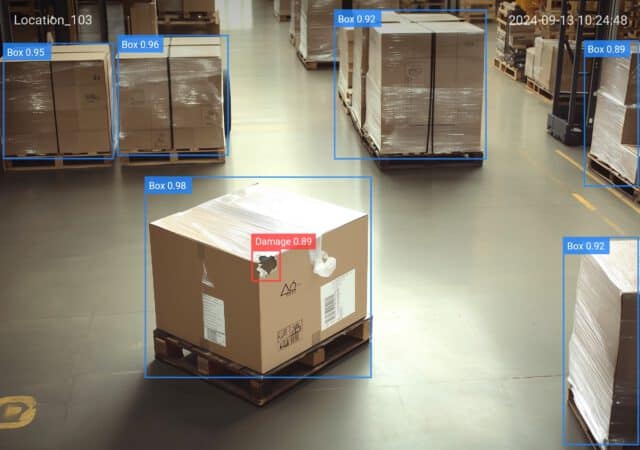
AI Vision enables full coverage visual inspection, improving detection rates for damaged goods and enhancing quality assurance without scaling staff.
5. Process monitoring for long-term behavioral change:
Enforcing process adherence automatically leads to improved compliance over time, creating a safer and more efficient operational environment.
Setting the scene: the significance of supply chain and timing
The surge in e-commerce since 2020 has led to an increased demand for fulfillment centers, creating a need for automation in the supply chain to cope with labor shortages and operational complexities.
Supply chain environments are ideal for computer vision implementation due to these challenges.
Understanding computer vision and its application
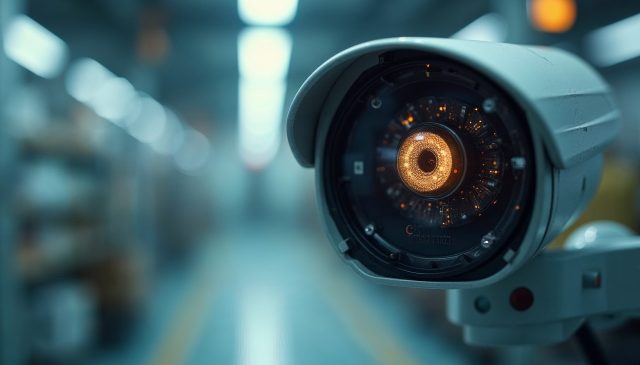
AI Vision allows machines to interpret images and videos in real-time, transforming existing CCTV infrastructure into active surveillance tools in the supply chain.
The process involves data collection, labeling and training, logic and action definition, on-site deployment, and analysis for strategic decision-making.
Computer vision enhances human oversight and provides real-time visibility without replacing human involvement.
Use cases: practical applications of AI Vision
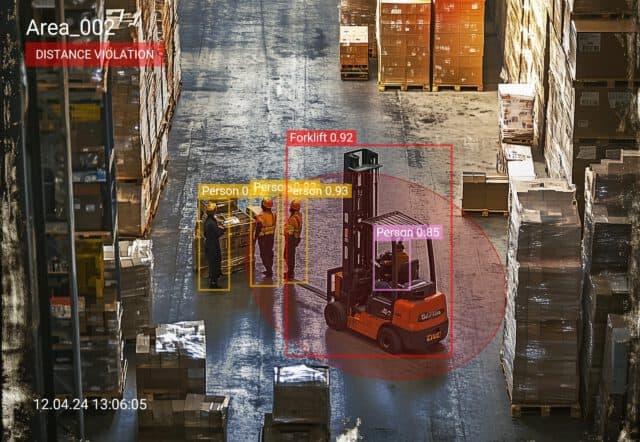
AI Vision offers limitless applications, with health and safety monitoring, defect detection in fulfillment, and process adherence standing out for their accessibility and impact.
1. Health and Safety monitoring:
Pro-active detection of near misses aids in building risk profiles and preventing accidents through automated incident capture.
2. Defect detection in fulfillment:
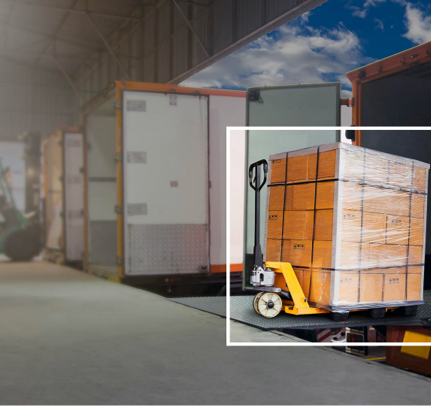
Automated defect detection reduces returns and re-shipping costs by inspecting every pallet or package for damage.
3. Process adherence and compliance:
Monitoring tasks like PPE enforcement and quality assurance drives compliance and reduces escalations over time.
Addressing common queries
Q1: Can existing cameras be used?
Yes, most AI vision setups integrate seamlessly with standard CCTV infrastructure.
Q2: What alerts are possible?
Various alerts, from audible sirens to email notifications, can be configured based on the application.
Q3: Cloud or on-site deployment?
Inference happens on-site for speed and privacy, with metadata sent to the cloud for analysis.
Q4: Role of GenAI?
GenAI will play a role in risk forecasting and insights based on accumulated data.
Starting small to demonstrate fast results
Begin with health and safety applications of computer vision for quick ROI demonstration and scalability.
Computer vision is no longer experimental but a strategic necessity in the evolving landscape of warehouses and workplace safety.
Don’t wait – start your computer vision journey today.
Upcoming webinar
Join us for the next webinar in our series – ‘Revolutionizing workplace safety with AI vision’ on July 15, 3.00pm BST, to explore the transformative impact of AI-powered computer vision on workplace safety.
Save your spot here.