Ergonomic injuries can wreak havoc on manufacturing productivity, silently affecting your bottom line. When your top line supervisor calls in sick yet again due to back pain, and two more workers from the same shift are on restricted duty for wrist injuries, you know the problem is serious. Not only are you left scrambling to cover shifts, but you’re also faced with managing workers’ compensation claims that can cost your company an average of $50,000 per incident.
Welcome to the costly hidden issue plaguing the manufacturing industry: ergonomic injuries and musculoskeletal disorders (MSDs).
Manufacturing’s Ergonomic Injury Crisis by the Numbers
MSDs cost US manufacturers over $13 billion annually, surpassing the GDP of many small countries. Unlike machine failures that trigger immediate alerts, ergonomic injuries develop slowly, one repetitive motion at a time.
The statistics are alarming.
The Human and Financial Cost:
- Manufacturing has an MSD incident rate of 41 per 10,000 workers, nearly double the private sector average
- 502,380 days away from work due to MSDs in 2021-22 alone
- Average workers’ compensation claim for an MSD: $50,000+
- Worker injuries cost employers over $2,000 per employee annually
- Hidden costs (overtime, retraining, productivity loss) are 4-5 times the direct medical costs
The Operational Reality:
- 38% of all workplace injuries in manufacturing are MSDs
- Average time to return to work: 31 days for severe cases
- Repeat injury rate is 25-40% higher for workers with previous MSDs
These figures aren’t just numbers; they translate into real bottom-line impacts on your operations.
The Traditional Approach to Ergonomic Injury: Reactive and Ineffective
Most manufacturing facilities rely on reactive ergonomic management: annual assessments that overlook day-to-day variations, incident reporting after injuries occur, and periodic safety walks covering less than 5% of actual work performed.
This approach is akin to monitoring machine health by waiting for a catastrophic breakdown. By the time you notice the problem, the damage is already done.
Computer Vision: Revolutionizing Ergonomic Monitoring
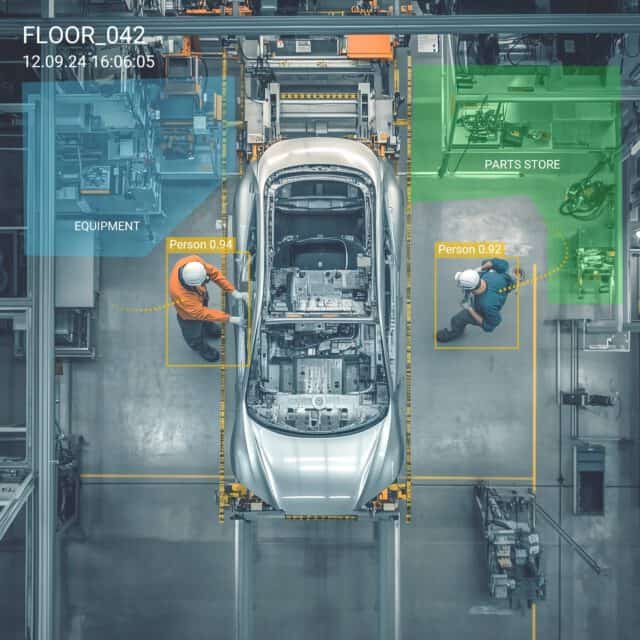
AI-powered computer vision revolutionizes ergonomic monitoring from reactive to proactive, offering continuous oversight that human observers cannot match.
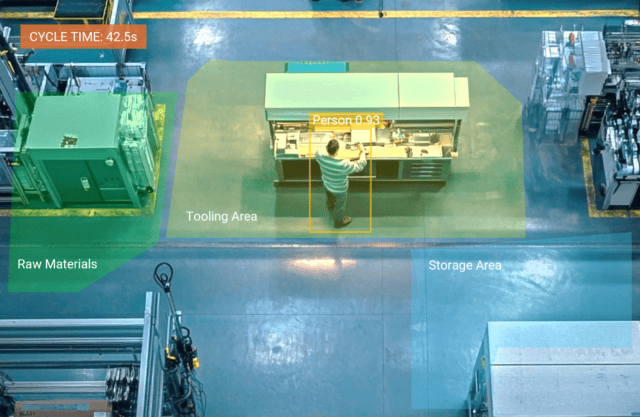
Modern systems analyze live video feeds from existing cameras, utilizing trained models to detect:
- Posture analysis: identifying awkward bending, reaching, and twisting
- Repetitive motion patterns: pinpointing high-frequency, high-risk movements
- Load handling: recognizing improper lifting techniques
- Prolonged static positions: flagging extended periods in harmful postures
What Sets AI Vision Apart:
- 100% coverage: monitoring every worker, every shift, every day
- Real-time alerts: enabling immediate intervention before an injury occurs
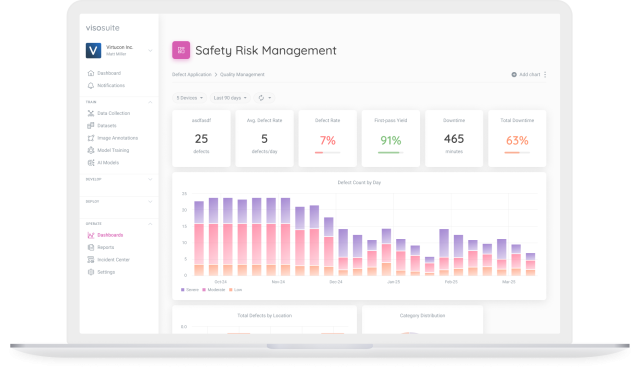
- Quantifiable data: providing metrics that demonstrate ROI and inform investment decisions
Real-world Impact: Demonstrating the Business Case
Case Study: Automotive Parts Manufacturer
An automotive supplier with 500 employees implemented computer vision ergonomic monitoring across three production lines.
Before Implementation:
- 23 MSD incidents requiring medical treatment
- $1.2 million in workers’ compensation costs
- 15% turnover rate attributed to injury concerns
After Implementation:
- 6 MSD incidents (74% reduction)
- $310,000 in workers’ compensation costs (74% reduction)
- 8% turnover rate (47% reduction)
- 22% improvement in line efficiency
- ROI achieved in 14 months
The Game-changing Leading Indicators
Computer vision offers metrics that drive continuous improvement:
- Real-time ergonomic injury KPIs:
- Risk exposure time per worker/shift
- Repetitive strain frequency and intensity
- Intervention success rates
- Workstation comparative risk scores
This data empowers safety managers to evolve from mere compliance officers into strategic partners, providing executives with actionable insights that enhance both safety and productivity.

Addressing Executive Concerns
“How do we know this won’t disrupt production?”
Computer vision seamlessly integrates with existing camera systems and requires no changes to worker procedures. Implementation typically takes 48-72 hours per line with zero production downtime.
“What about worker privacy and acceptance?”
Modern systems focus on posture and movement patterns, not individual identification. Workers often feel cared for rather than surveilled.
“Can we prove ROI before full deployment?”
Start with a pilot program on the highest-risk line. Within 90 days, you’ll have quantifiable data on incident reduction, productivity gains, and cost savings.
The Hidden Productivity Multiplier
Besides preventing injuries, AI Vision provides unexpected benefits:
- Quality Improvements: By preventing ergonomic strain, quality defects decrease by 15-25% during peak demand periods.
- Efficiency Gains: Proper ergonomics reduce worker fatigue, leading to sustained performance and average productivity increases of 12-18%.
- Retention Benefits: Companies with proactive ergonomic programs report 40% higher retention rates, saving over $15,000 per avoided turnover.
- Insurance Advantages: Carriers offer premium discounts of up to 35% for facilities with proven proactive safety programs.
The Competitive Imperative
While you’re contemplating, competitors may already be implementing computer vision ergonomic monitoring. Early adopters of AI Vision gain advantages like:
- Lower operating costs due to reduced injury expenses
- Increased productivity from less fatigued employees
- Enhanced talent attraction as safety-conscious workers prefer proactive employers
- Improved supplier relationships as clients demand safety performance metrics
Solving the $13 Billion Problem
Manufacturing’s $13 billion ergonomic challenge has a solution. Computer vision technology is proven, scalable, and yielding measurable results industry-wide.
Every day of delay results in preventable injuries in your facility. Each month of hesitation gives competitors an edge with proactive safety programs. Every quarter of postponement leaves money on the table while endangering workers.
Computer vision ergonomic monitoring signifies the future of manufacturing safety, where prevention supersedes reaction, data steers decisions, and every worker returns home healthy.
The technology is ready now, and the ROI is evident. The question remains: will you lead the change or follow those who’ve already embarked on the journey?