Blockchain scalability is a significant challenge that has led to the exploration of innovative solutions such as Plasma and sharding. These technologies aim to enhance transaction throughput and network performance, addressing the increasing demands of decentralized networks.
This guide delves into the intricacies of Plasma and sharding, highlighting their unique features, advantages, and drawbacks. By understanding the core principles and implications of these solutions, we gain insight into how they impact blockchain scalability. Join us as we unravel the complexities of these technologies and their contributions to the future of decentralized systems.
Understanding Plasma
Plasma, also known as Ethereum Plasma, is a scaling solution proposed by Vitalik Buterin to improve the performance of the Ethereum network. It involves creating a network of side chains that operate independently from the main Ethereum blockchain. These side chains, or child chains, enable customized smart contracts to meet diverse requirements.

Illustration of plasma blockchain. Source: ResearchGate
Plasma’s architecture allows for the deployment of multiple child chains that can execute unique smart contracts, reducing congestion on the main chain. By leveraging the security of the main chain, Plasma provides a scalable solution for handling a variety of transactions.
Key Components of Ethereum Plasma
Ethereum Plasma incorporates off-chain computation, state commitments, entries and exits, and dispute arbitration to ensure efficient and secure transaction processing. These components work together to maintain the integrity of the network and prevent fraudulent activities.
How Ethereum Plasma Works
Plasma optimizes Ethereum’s performance by offloading transaction processing to side chains while settling transactions on the main Ethereum blockchain. This approach ensures security guarantees while enhancing scalability.
While Plasma transactions occur off-chain, periodic state commitments are published on the mainnet to validate transactions and prevent inconsistencies. This design prevents unauthorized access and enhances network security.
Benefits of Using Plasma for Scalability
- Plasma chains offer enhanced security by anchoring within the mainchain’s security.
- Plasma facilitates quicker transactions and supports diverse smart contract functionalities.
Limitations of Plasma for Scalability
- Withdrawal timelines for shifting coins between layers can be lengthy, impacting user experience.
- Users may face delays in withdrawals due to fraud prevention measures.
Exploring Sharding
Sharding divides blockchains into smaller sections called shards to distribute transaction processing efficiently. Ethereum has adopted sharding to enhance scalability, with a Beacon Chain coordinating multiple shards.
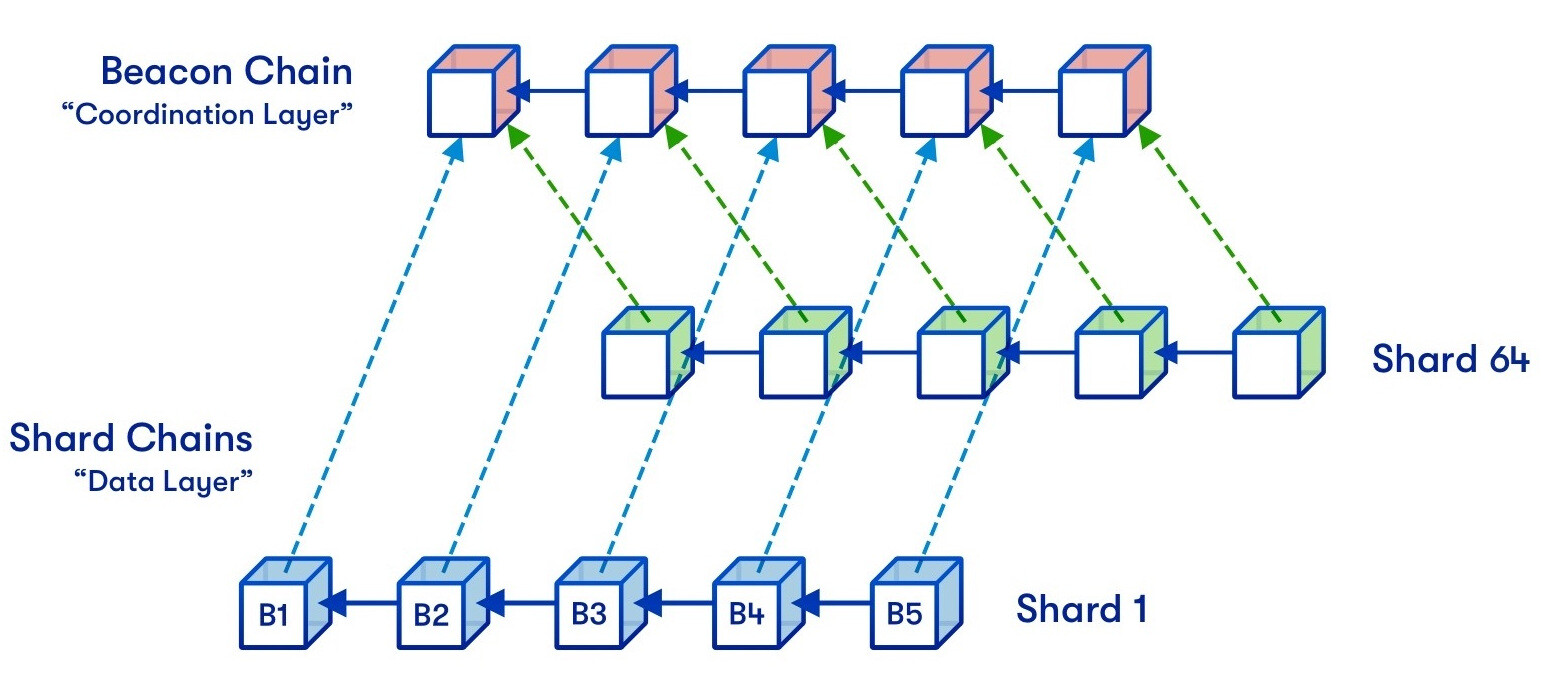
Illustration of Ethereum sharding. Source: vitalik.eth.limo
Sharding simplifies node operations and improves scalability by dividing data across multiple shards. This approach enhances network performance and supports the adoption of layer 2 solutions.
How Sharding Enhances Blockchain Efficiency
Sharding boosts the network’s Transactions Per Second (TPS) by dividing it into smaller units. This division enables faster transaction processing and scalability, vital for accommodating the increasing demands of blockchain applications.
Benefits of Blockchain Sharding
Sharding enhances network scalability, data security, and accessibility, making blockchain technology more efficient and accessible to a broader audience.
Security Considerations in Sharding
Sharding introduces security risks such as shard collisions and corruption, which can be mitigated through proper regulations and safeguards.
Conclusion
Plasma and sharding offer unique solutions to blockchain scalability challenges, emphasizing different approaches to enhance network performance. While Plasma focuses on side chains and customized smart contracts, sharding divides the network into smaller segments for improved efficiency. Both technologies play a crucial role in shaping the future of decentralized systems.
Updated in September 2025.