Bitcoin experienced a period of consolidation within a specific range and closed the month above $90,000, sparking optimism for a positive annual conclusion. However, the price of BTC plummeted below $86,000, causing a ripple effect throughout the markets. The global cryptocurrency market capitalization dropped below $3 trillion, resulting in a loss of nearly $140 billion. Despite the discounted price, ETF accumulation remained minimal.
The primary reason behind the recent market collapse is attributed to liquidations and high volatility. However, it is believed that a lack of liquidity from buyers played a significant role in this downturn. This raises concerns about the confidence of buyers in Bitcoin’s price recovery, as a typical decline escalated into a sharp downward trend.
Liquidity Disappears Prior to Bitcoin Price Decline
As the new week began, the depth of the order book on major exchanges had significantly decreased. While market makers typically reduce their inventory over weekends, this reduction was more pronounced this time. Bid-side liquidity, which represents the volume of buy orders within a 2% range of the current price, decreased by an estimated 30–50% for Bitcoin and Ethereum, setting the stage for increased volatility.
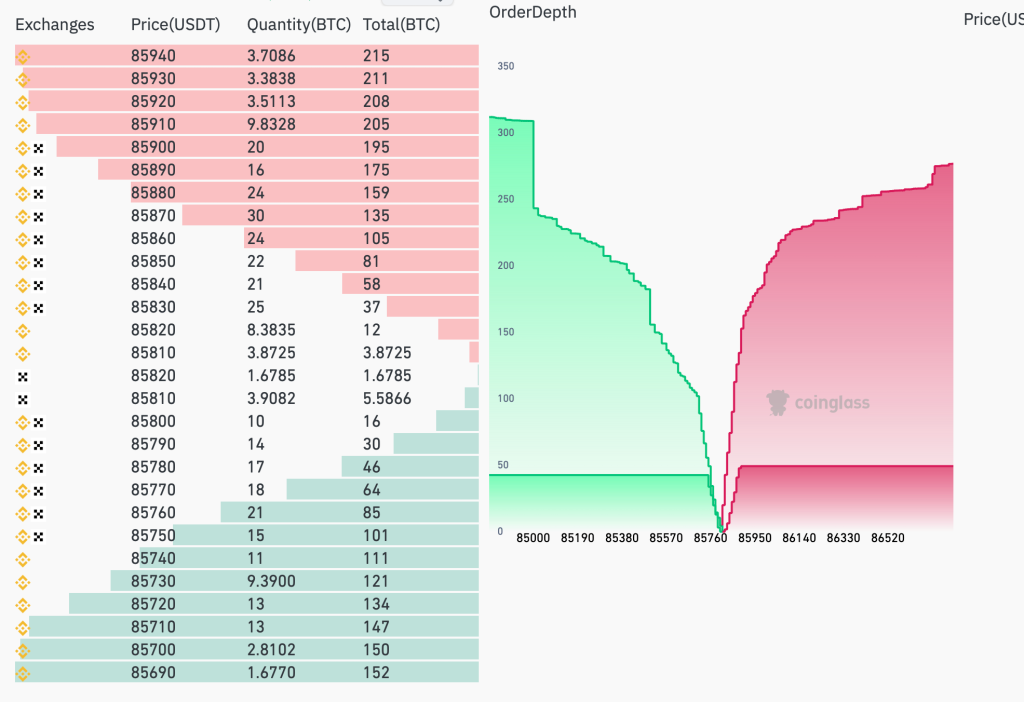
The order book data, analyzed as BTC dropped below the $86,000–$85,700 range, displayed a significant imbalance:
- Sell orders were heavily stacked towards the top
- Buy orders were almost non-existent near the bottom
- Total bid liquidity near the critical $85,760 level nearly vanished
In the depth chart, the green side representing buyers dropped sharply before stabilizing, indicating a lack of demand in the market. Conversely, the red side representing sellers thickened around the $85,900–$86,500 range, overpowering the thin bid side.
This structural pattern transformed a routine pullback into a rapid decline.
Spot CVD Indicates Buyers Retreating, Not Sellers Aggressing
To confirm whether selling pressure dominated the market, the Spot Taker Cumulative Volume Delta (CVD) was analyzed. This tool tracks the cumulative difference between market buy and sell volumes over a period of time.
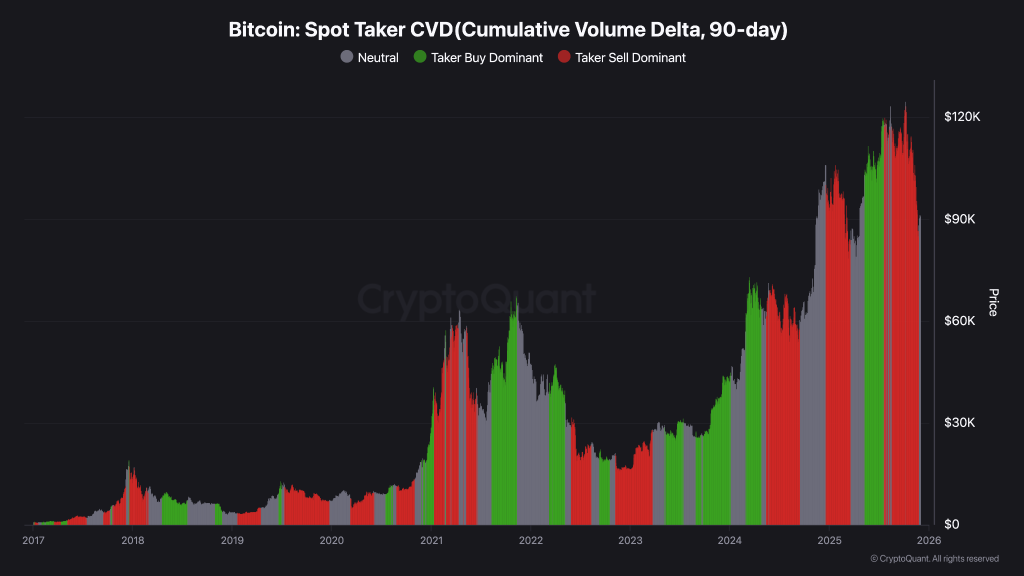
The chart clearly illustrated a sharp decline in buy-side activity, with taker-buy volume diminishing during the drop. Notably, there was no significant increase in taker-sell dominance, indicating that Bitcoin’s decline was primarily due to a lack of buyers rather than panic selling.
This observation aligns with the signals from the order books: the price did not plummet due to mass selling but rather due to a lack of buying interest.
Is a Recovery Feasible?
The recent market crash did not follow the typical pattern of a risk-off event or liquidation cascade. Historically, similar drops driven by liquidity tend to bounce back swiftly once market makers restore depth and buyers re-enter the market. Key levels to monitor include
- $85,800 – immediate resistance
- $86,500–87,000 – short-term recovery range
- $83,500 – the next significant demand area if liquidity remains scarce
If fresh buying interest emerges and the CVD turns positive again, a rapid recovery is probable. However, if buyer liquidity remains weak, the price of Bitcoin (BTC) may continue to decline until stronger demand emerges.
Trust with CoinPedia:
CoinPedia has been a reliable source for accurate and timely updates on cryptocurrency and blockchain developments since 2017. Our content is meticulously crafted by a team of experts and journalists, adhering to strict Editorial Guidelines based on E-A-T (Experience, Authoritativeness, Trustworthiness). Each article is thoroughly fact-checked against credible sources to ensure accuracy, transparency, and credibility. Our review policy ensures unbiased assessments when recommending exchanges, platforms, or tools. We are dedicated to delivering timely insights on all things crypto & blockchain, ranging from startups to industry leaders.
Investment Disclaimer:
All opinions and insights shared reflect the author’s perspective on current market conditions. It is advisable to conduct your own research before making investment decisions. Neither the author nor the publication assumes liability for your financial choices.
Sponsored Content and Advertisements:
Our site may feature sponsored content and affiliate links. Advertisements are clearly identified, and our editorial content remains independent from our advertising partners.