
Emerging and traditional technologies play a crucial role in establishing wireless connections in tunnels.
Maintaining wireless and mobile connectivity in underground tunnel-like environments, commonly known as “tunnel radio,” poses numerous challenges. These spaces, shielded from external signals, face various electrical, mechanical, RF, and other obstacles unlike those in larger above-ground enclosed spaces such as offices and warehouses.
Despite the challenges, such connectivity is essential for safety, operational efficiency, and meeting passenger expectations in subway systems. In the past, limited and unreliable tunnel underground options were available, such as personal walkie-talkie radios or wired phones with restricted mobility, before the advancements in wireless technologies.
This FAQ delves into the tunnel-radio dilemma and explores available solutions, acknowledging that there is no one-size-fits-all approach due to varying factors like distance, flexibility, cost, and more. It then focuses on one solution called “leaky cable” technology.
It’s worth noting that the term “tunnel radio” is commonly used to describe underground scenarios, although it may lead to confusion with vendors like Tunnel Radio of America Inc.
Q: What challenges does the tunnel environment present?
A: Above-ground and underground wireless infrastructures differ significantly. While setting up lines and antennas in open spaces is relatively straightforward, tunnels pose challenges like signal absorption, bends, and twists that obstruct signal paths.
The underground environment also features moving obstacles, changes in pathways, and other complexities that hinder consistent wireless connectivity across voice, data, Wi-Fi, and Ethernet.
Q: Why is tunnel or underground connectivity necessary?
A: There are several reasons, including safety and security, regulatory requirements, operational monitoring, and meeting user expectations for Wi-Fi and internet access.
Q: How was connectivity achieved in the past?
A: In the pre-RF era, wired stations and primitive communication methods were used, highlighting the challenges of maintaining connectivity in dynamic underground environments.
Q: What modern electronic solutions are available?
A: Common approaches include natural propagation with local repeaters and leaky coaxial cables, either individually or in combination.
Q: What are some key considerations?
A: Safety-critical scenarios require a thorough analysis of failure modes to ensure system resilience and functionality under varying conditions.

Q: Are there standardized solutions available?
A: Each solution must be meticulously designed to account for factors like frequencies, modulation, space, maintenance, power requirements, and more, rather than assuming a simple GHz-band Wi-Fi connection will suffice.
Additionally, two-way radios operating in specific frequency bands are essential for person-to-person voice communication in safety-critical environments.
While each tunnel presents unique challenges, there are commonalities and typical examples that have been analyzed analytically and through field measurements.
Modeling and specifics
Q: Can you provide an example?
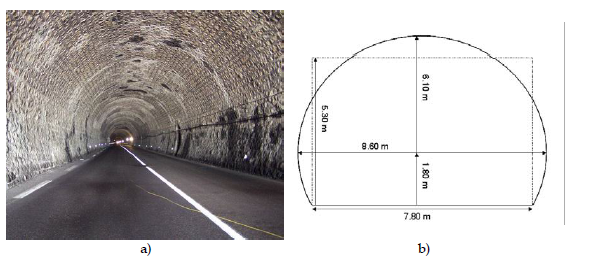
A: A 3-km straight tunnel, as depicted in Figure 2, was evaluated with a half-wave 510-MHz transmit (Tx) dipole and corresponding receive (Rx) antenna, showcasing the challenges in signal propagation.
Q: What were the findings regarding signal drop-off?
A: Signal power decline at 510 MHz with varying axial distances between Tx and Rx antennas was observed, highlighting challenges in maintaining signal strength.

These results highlight the challenges at specific frequencies, with more severe signal attenuation at higher gigahertz frequencies.
Q: Is this tunnel scenario representative?
A: While straight tunnels are common for roadways, mining tunnels with irregular shapes and structures pose unique challenges for signal propagation analysis.
Q: Is the antenna and propagation setup feasible?
A: The arrangement can be viable in suitable circumstances, requiring meticulous engineering to meet reliability, frequency band support, data rate, and other requirements, especially when handling multiple bands and applications.
While some assessments can be done analytically, experience plays a crucial role in addressing complex connectivity demands in challenging environments.
Q: Is there an alternative approach?
A: The leaky-cable method serves as a primary alternative, which will be discussed in the subsequent part.
References
Radiating Cables, Times Microwave Systems
Radiating Cable: The Answer to the Confined-Space Communications Challenge, Tunnel Radio
On the Right PATH, Times Microwave Systems
All-in-One Digital Leaky Feeder System, Tunnel Radio
ULTRACOMM Distributed Antenna System, Tunnel Radio
ULTRACOMM System Manual, Tunnel Radio
Challenges of Underground Transportation Wireless Coverage, American Tower
Underground Tunnel Communication Innovations Whitepaper, Innovative Wireless Technologies (IWT)
Wireless Communication in Tunnels, ResearchGate
Leaky Cables, Imperial College/UK
Leaky cables are a good thing, Urgent Communications/Informa
Related EEWorld Online content
Getting one wire to do more, Part 3 – Powering the antenna LNA
Microwave/Millimeter Wave interconnects, Part 1: Coaxial cables
Microwave/Millimeter Wave interconnects, Part 2: Connectors and cable assemblies
Coaxial cable myths and misunderstandings
Filed Under: Communications, Featured