Authored by Russ Garcia, CEO of Menlo Micro
As wireless networks progress from 5G Advanced to 6G, the importance of RF switching as a critical system bottleneck is becoming increasingly evident. Modern MEMS technology offers significant advancements in linearity, power handling, and efficiency, redefining the design of next-generation RF front-ends.
The advancement of technologies and capabilities that we often take for granted relies on rapid innovation at the component level. In the realm of next-generation wireless systems, it is now clear that performance is no longer limited by basebands or antennas, but by a crucial yet less visible bottleneck: RF switching. MEMS switches are disruptive and essential technologies making their mark in a sector where incumbent technologies like electromechanical and solid-state relays (EMRs and SSRs) fall short in meeting the performance, compact form factor, and reliability requirements of modern applications. This bottleneck is increasingly becoming a limiting factor in 5G and emerging 6G architectures.
One significant area where this bottleneck is evident is in global cellular network technology. The transition from 4G to 6G, spanning from the early 2010s to an anticipated commercial realization around 2030 for 6G, will cater to the need for faster data speeds and lower latency. It signifies a shift from high-speed mobile internet to immersive, AI-native, and universally connected hyper-connectivity. Crucially, this transition is fundamentally reshaping RF front-end architecture requirements across the entire wireless ecosystem.
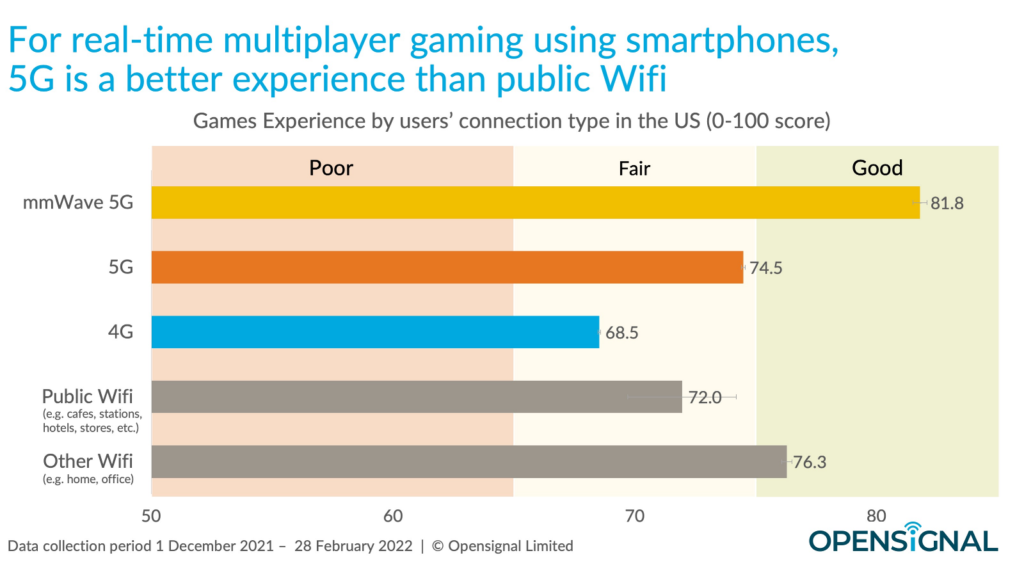
Presently in the 5G era, the market continues to evolve from basic 5G, which often relies on existing 4G infrastructure, to 5G Standalone (5G SA) and 5G Advanced. 5G enables ultra-fast broadband, resolves bandwidth and buffering issues in densely populated areas, and its low-latency performance is crucial for real-time applications such as gaming, autonomous vehicles, and remote automated manufacturing. With the advent of 6G, expected to achieve data speeds up to 1 terabit per second and further reduce latency compared to 5G, a new approach to RF signal routing and switching is imperative to achieve such levels of performance.
The performance of any system or design is only as strong as its weakest component and must also meet criteria such as cost, reliability, and physical size. For the next generation of cellular network technology, a fresh approach to RF switching is necessary to address both technical challenges and cost-of-ownership issues associated with EMR and SSR technologies. RF switching is increasingly becoming the limiting factor as data rates rise on multiband networks.
6G Growth Signals a Full Redesign of RF Infrastructure, Not Just Expansion

Similar to the transition from 3G/4G, 5G and 6G will coexist during the latter’s phased introduction — there won’t be an abrupt switch, but the need for improved RF switching is immediate, and this necessity will escalate as 6G gains prominence. According to a 2026 Research and Markets report, the 6G network infrastructure market is projected to grow from $8.66 billion to $31.28 billion by 2030, indicating a remarkable CAGR of nearly 38%. This significant investment signifies not just network expansion but a complete overhaul of RF infrastructure on a large scale. While there are potential challenges hindering the widespread adoption of 6G, the relentless demand to fully enable AI and other technologies will likely prevail, leading to the forecasted rapid growth. Challenges to overcome include the deployment of dense networks of smaller antennas for shorter-range waves, as well as regulatory and interoperability issues requiring cross-geographical cooperation and alignment. These demands place added pressure on RF front-end design, particularly in terms of switching complexity, power efficiency, and signal integrity.
High-performance RF Switching is a Key Enabler for 5G and Beyond 6G
Compared to previous wireless generations, 5G networks operate over a broader range of frequencies with wider bandwidths. Specifically, 5G New Radio (NR), the global standard for a unified air interface powering 5G networks, specifies channel bandwidths up to 100 MHz in sub-7 GHz FR1 spectrum and up to 400 MHz in the mmWave FR2 spectrum. High-performance RF switches are essential for managing complex signal routing between multiple antennas and wide frequency bands simultaneously, ensuring the reliable maintenance of signal integrity. In practical terms, RF switching has become a critical factor in overall system performance in beamforming and multi-band architectures. Even a slight loss or distortion introduced by the RF switch can jeopardize the performance and reliability of the entire system. Therefore, RF switches must minimize signal degradation while offering swift band switching and multi-path routing capabilities. Low insertion loss, high linearity, low power consumption, and wideband capabilities are crucial for 5G RF switches, marking them as core system requirements rather than incremental enhancements.
High-speed operation to facilitate rapid switching for seamless handovers, adaptive beam steering, and load balancing is a desired attribute. This is particularly true in beamforming and dynamic spectrum-sharing applications supporting fast-moving devices in trains and other vehicles, where numerous applications are emerging. As networks become more dynamic and AI-optimized, switching speed and linearity directly impact user experience and system efficiency.
Miniaturization and ease of integration are becoming increasingly critical factors for designers and system architects in this sector. With demands on available power budgets continually rising, low power requirements and high levels of efficiency are essential. Proven reliability is a prerequisite, with many applications expecting long operational lifespans with billions of switching cycles, where consistent performance without degradation or errors is non-negotiable, especially in systems supporting safety functions. These requirements are pushing legacy switching technologies to their practical limits.
6G demands a significant leap in performance compared to what 5G requires for functions like RF switching. This necessitates architectural changes rather than mere incremental improvements.
MEMS Provides a Step Change in Performance for 5G and Beyond
In cellular network applications, there are four primary incumbent approaches to RF switching: EMRs, PIN diodes, SOI (Silicon-On-Insulator), and GaN. While EMRs have been in use for many decades and offer benefits such as signal isolation and low insertion losses, their speed, limited lifespan, size, and power consumption are not aligned with modern RF switching requirements. PIN diodes, commonly found in base stations, are well-suited for high-frequency, high-power applications and provide the rapid switching necessary. However, their continuous DC supply requirement to maintain the ‘ON’ state introduces significant thermal load and excessive power consumption.
RF SOI switches, prevalent in smartphones and dominant in 5G front-end designs, offer cost-effectiveness and performance at sub-6GHz frequencies, along with high integration. However, they lack the bandwidth, linearity, and power handling capabilities needed for 6G networks. At higher frequencies in 5G and beyond, parasitic signal losses become problematic and require management through complex approaches like combining SOI with other technologies such as SiGe, BiCMOS, or GaN. Pure GaN-based RF switches are suitable for high-power, high-frequency applications and are utilized in satellite networks, where their higher cost compared to standard silicon is acceptable. However, some trade-offs in terms of linearity force designers to operate them below their peak potential, and complex drive circuits are often necessary to prevent unwanted turn-ons. Across all incumbent technologies, the trade-off space is increasingly limited; improving one metric usually degrades another. This narrowing design space indicates that further enhancements from existing RF switching approaches are becoming more marginal and application-specific rather than architectural.
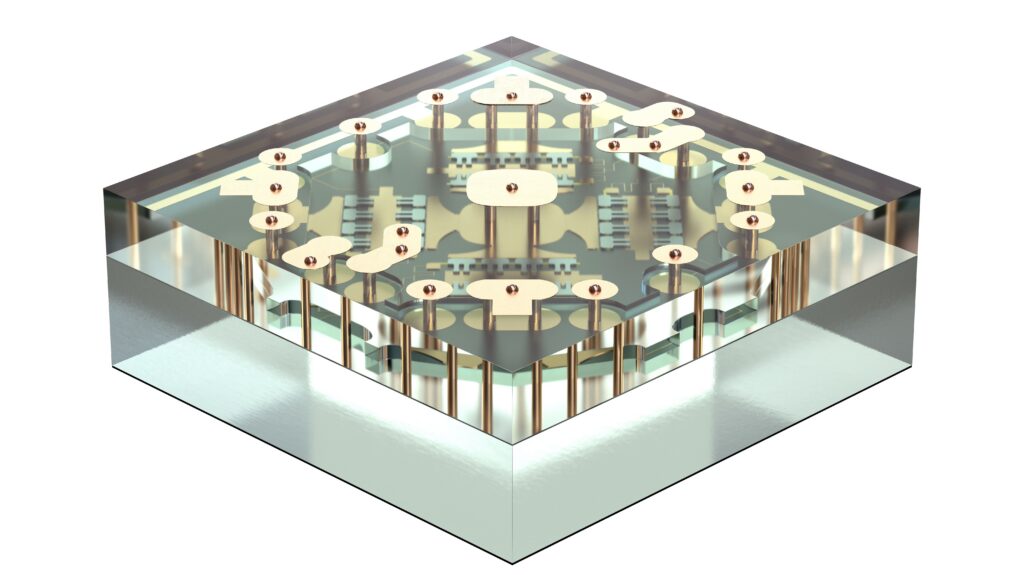
Modern MEMS-based RF switches offer various performance benefits compared to the aforementioned technologies. MEMS technologies can deliver up to 100 times better linearity than solid-state or electromechanical switches, typically exceeding 85 dBm. Enhanced linearity reduces intermodulation distortion, minimizes harmonic effects, and ensures a low error vector magnitude in 5G systems. This directly translates to more efficient spectrum utilization and improved system-level performance in dense network environments. These attributes prevent RF switches from becoming a limiting factor in overall system performance. Moreover, RF switching now plays a role not only in performance but also in front-end robustness, aiding in managing reflected power, signal stress, and dynamic load conditions in dense, high-frequency architectures. The capability of MEMS technology to handle hundreds of watts of power in a compact package aligns exceptionally well with 5G applications and becomes even more crucial as 6G deployment expands. Essentially, MEMS eliminates a growing constraint in RF system design rather than merely enhancing an existing one. This shift signifies a move from incremental component optimization to a redefinition of the underlying RF system performance envelope available to designers.
While MEMS technology offers significant advantages for many RF applications, it is essential to acknowledge that different switching technologies are suitable for different system requirements. Solid-state solutions excel in applications necessitating extremely rapid switching speeds, such as high-speed transmit/receive switching, where nanosecond-level response times are critical.
MEMS-based RF switches typically operate on microsecond timescales — up to 1000 times faster than EMRs — making them ideal for applications like beamforming, tunable/switchable filters, or antenna tuning and switching where RF performance outweighs ultra-fast switching speed. In these applications, exceptional linearity, high isolation, ultra-low insertion loss, high power handling, reliability, and extended operational life deliver greater overall system value than nanosecond switching.
The value of MEMS lies in enabling RF systems where signal integrity and overall RF performance take precedence over the need for ultra-fast switching. As RF architecture grows more demanding in 5G, emerging 6G, satellite communications, radar, and advanced test systems, these attributes become increasingly critical.
Compared to other RF switching technologies, MEMS solutions offer significantly smaller and lighter overall subsystem solutions with notably low power requirements. Additional characteristics such as low insertion loss, minimal ON resistance, high air gap isolation, silent operation, and durability enhanced by vibration resilience make them attractive for designers of the latest 5G and 6G systems for both ground and space applications. Importantly, they empower system architects to simplify RF front-end design, enhance efficiency, and scale performance without proportional increases in power consumption or complexity. As RF systems become more densely integrated and wireless infrastructure investment rises, technologies that streamline system complexity while enhancing performance and system-level robustness are likely to gain increasing design momentum across commercial, defense, and aerospace applications.
Filed Under: Communications, Featured