Augmented reality, also known as AR, has become a ubiquitous term in today’s technology-driven era. From innovative gaming experiences to interactive advertising campaigns, AR has the potential to transform various industries by overlaying digital content onto the real world. But have you ever wondered who the mastermind behind this revolutionary technology was? Who actually invented augmented reality?
The answer to this question is not straightforward. Unlike other groundbreaking inventions, augmented reality was not invented by a single person. Instead, it was a collective effort of several pioneers and researchers who worked on developing this technology over the years. In the following paragraphs, we will delve into the history of augmented reality and explore the contributions of some of the key figures who played a vital role in its invention.
In 1992, Tom Caudell, an electrical engineer working for Boeing, invented Augmented Reality (AR). He was working on a project to make it easier for workers to assemble airplane components and came up with the idea of overlaying computer-generated information over the user’s physical environment. AR was initially used in industrial settings, but has since been adapted for use in a variety of consumer products and applications.
Who Invented Augmented Reality?
Augmented reality (AR) has become increasingly popular in recent years. It combines real-world objects with virtual content, creating an enhanced experience for users. But who invented augmented reality?
The Early Years of Augmented Reality
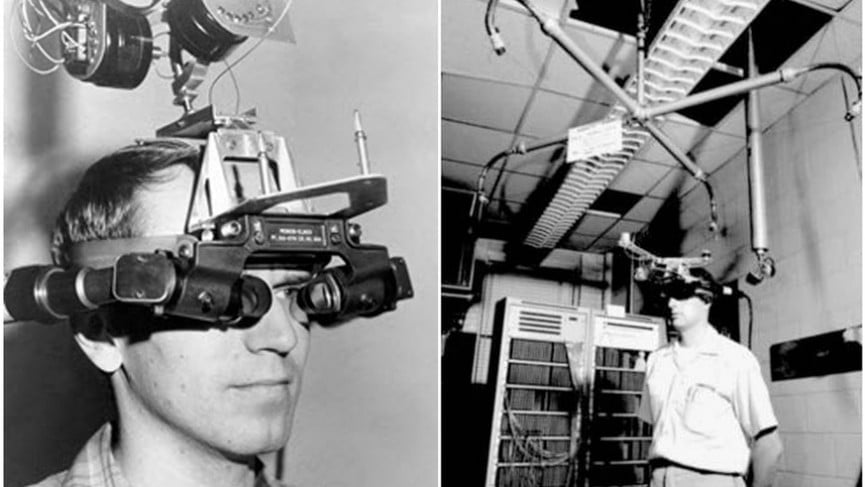
The concept of augmented reality has been around since the 1950s, when Morton Heilig created the Sensorama, an arcade-style machine that simulated a motorcycle ride. Heilig also developed the Telesphere Mask, a 3D virtual reality headset. In the 1960s, Ivan Sutherland and his student Bob Sproull developed the first head-mounted display for computer graphics.
The 1970s saw the development of the first augmented reality system, designed by DARPA (the Defense Advanced Research Projects Agency). The program, called the SuperVision system, used a helmet-mounted display and a computer to help soldiers detect enemy troops.
The Modern Era of Augmented Reality
In the 1990s, Steve Mann invented the EyeTap Digital Eye Glass, a wearable computer with a camera that could superimpose images onto the real world. Mann is considered the father of wearable computing and augmented reality.
In the 2000s, AR technology began to gain traction. In 2001, Hirokazu Kato and his team developed ARToolKit, a library of computer vision algorithms that made it possible to track and recognize objects in a 3D space. This technology has been used in many augmented reality applications, including video games and interactive displays.
Meanwhile, in 2008, Apple released the first iteration of its popular iPhone, which featured a camera and GPS capabilities. This made it possible for developers to create augmented reality apps for the device. In 2009, the company released the ARKit, which gave developers the tools to create augmented reality apps.
Today, augmented reality is being used in a variety of ways, from gaming to medical simulations. Companies like Microsoft, Google, and Apple are investing heavily in augmented reality technology, and it’s likely that AR will become even more ubiquitous in the years to come.
Frequently Asked Questions
Augmented reality (AR) is an interactive experience of a real-world environment where the objects that reside in the real-world are “augmented” by computer-generated perceptual information.
Who invented augmented reality?
The concept of Augmented Reality (AR) was first proposed by Ivan Sutherland in 1968. At the time, Sutherland was a professor at Harvard University and his student, Bob Sproull, was the one who actually wrote the code for the first prototype. The prototype, which was called the “Sword of Damocles”, was a head-mounted display that could project simple wireframe graphics into the user’s field of view.
However, it wasn’t until the 1990s that AR began to gain traction as advances in technology made it possible to create more powerful hardware and software. In 1992, Louis Rosenberg created the first commercial AR system, Virtual Fixtures, which was used by the US Air Force to train fighter pilots. The system used head-mounted displays to project three-dimensional images over the real-world environment.
Who was the first to use augmented reality in commercial applications?
The first commercial application of augmented reality was developed by Louis Rosenberg in 1992. The system, known as Virtual Fixtures, was used by the US Air Force to train fighter pilots. Virtual Fixtures used head-mounted displays to project three-dimensional images over the real-world environment.
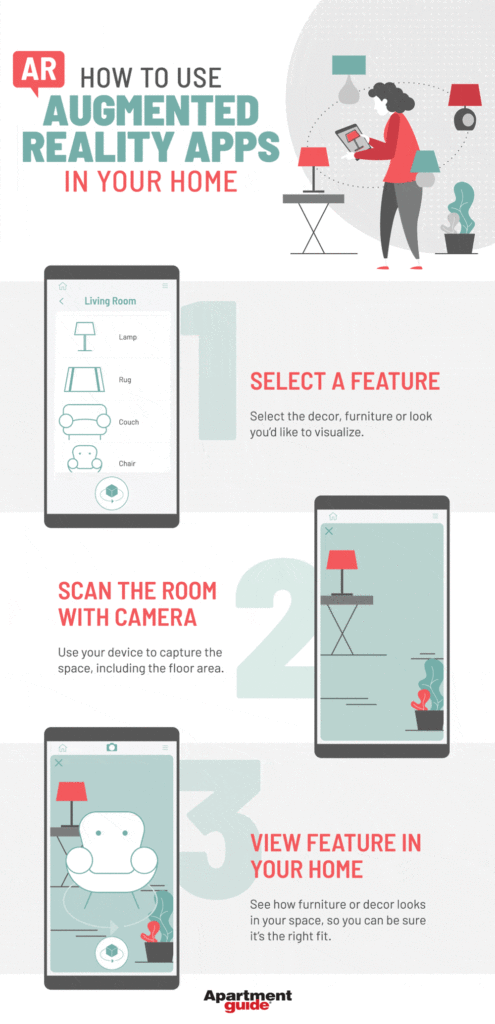
Since then, augmented reality has become increasingly popular in a variety of commercial applications, from retail to gaming. For example, the popular mobile game, Pokémon Go, uses augmented reality to allow players to catch virtual creatures in the real world. Retailers have also taken advantage of the technology to create immersive shopping experiences. Ikea, for example, has an AR app that lets customers preview how furniture would look like in their home before they buy it.
What are the main components of augmented reality?
The main components of augmented reality are hardware, software and content. Hardware includes devices such as head-mounted displays and handheld devices, which are used to project digital content into the real world. Software includes programs such as 3D modelling programs, which are used to create digital content such as 3D models, animations and images. Content is the digital content that is created using software and then projected onto the real world using hardware.
In addition to these components, there are also a number of other technologies that are used to create augmented reality experiences. These include sensors such as GPS and cameras, as well as software development kits (SDKs) which allow developers to create custom applications for augmented reality.
What are the benefits of augmented reality?
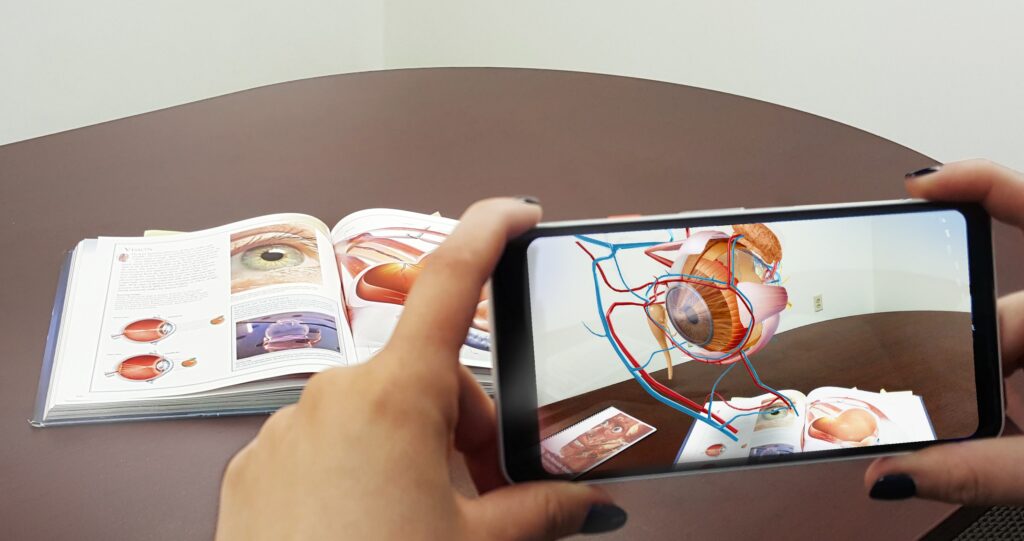
Augmented reality has a number of potential benefits. For example, it can be used to provide users with a more immersive experience when engaging with digital content. By projecting digital content onto the real world, users can interact with a 3D environment in a way that would otherwise be impossible.
In addition, augmented reality can be used to provide context-sensitive information to users. For example, by projecting additional information onto objects in the real world, users can learn more about their environment. This can be particularly useful in educational settings, where students can learn more about their surroundings in a more engaging way.
Finally, augmented reality can be used to improve safety in a variety of scenarios. For example, it can be used in medical settings to help medical personnel more accurately diagnose and treat patients. Similarly, it can be used in industrial settings to provide workers with real-time information about their environment.
What are the challenges of augmented reality?
One of the main challenges of augmented reality is the fact that it requires the user to have access to the necessary hardware and software. This can be costly, as users need to invest in a head-mounted display or handheld device in order to be able to use the technology.
In addition, augmented reality also requires a good connection to the internet in order to be able to access its content. This can be problematic in areas with poor internet connectivity, as users may not be able to access the content they need.
Finally, augmented reality also requires a good deal of computing power in order to be able to project the digital content onto the real world. This can be an issue in areas with limited computing resources, as users may not be able to access the technology.
In conclusion, the invention of augmented reality is a fascinating topic that has captured the attention of many people around the world. Although there have been many pioneers in this field, it is difficult to pinpoint a single inventor. The development of this technology is the result of years of research, experimentation, and innovation by many individuals and organizations.
Today, augmented reality is transforming the way we interact with the world around us. From education and entertainment to healthcare and manufacturing, this technology has the potential to revolutionize many industries. As we continue to explore the possibilities of augmented reality, we can look forward to a future where the line between the physical and digital worlds becomes increasingly blurred, and where new opportunities for creativity and innovation abound.