Maximizing Safety ROI: Overcoming the Data Dilemma
For safety leaders, the challenge of justifying investments in safety measures is a familiar one. In meetings, they advocate for better PPE enforcement, increased field audits, or investments in safety systems, only to be met with the question: “What is the return on investment (ROI) of safety?”
Historically, quantifying the ROI of occupational safety and health initiatives has been challenging. While the costs of implementing new technologies like AI systems are easily measurable, the same cannot be said for safety initiatives. However, a new approach powered by AI Vision is changing this narrative, providing a more accurate way to calculate safety ROI compared to traditional methods.
By harnessing the power of visual intelligence and real-time video analytics, health and safety leaders now have access to quantifiable key performance indicators (KPIs) that demonstrate the impact of safety programs on productivity, risk reduction, and overall profitability.

The Limitations of Traditional Safety Metrics
Most organizations rely on lagging indicators, such as lost time injury rates, recordable incidents, audit findings, and reported near-misses, to assess safety performance. While these metrics are valuable, they only capture the consequences of safety failures, not the underlying risks or behaviors that could lead to incidents.
Essentially, traditional safety metrics provide a limited view of safety performance, leaving many potential risks unaddressed.
Unlocking Safety ROI with AI Vision
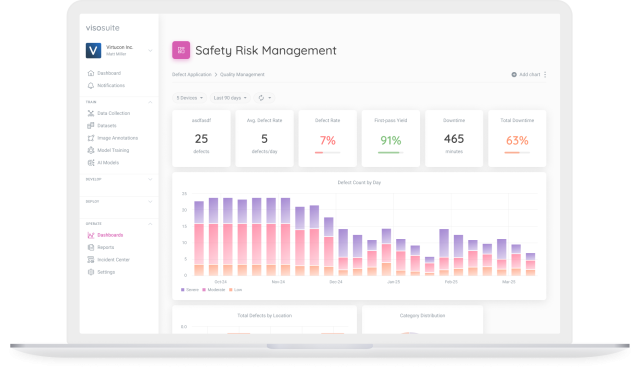
AI Vision systems leverage live video feeds from existing camera networks to analyze workplace behaviors and conditions. These systems not only detect potential safety risks in real time but also track, quantify, and visualize this data across different shifts and locations.
Real-time Leading Indicators for Safety Performance
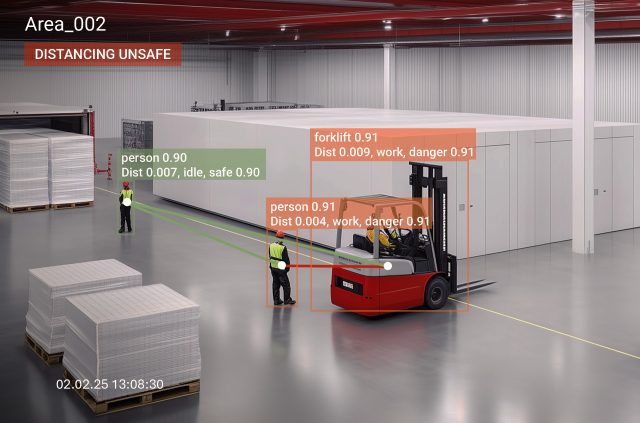
AI Vision provides safety teams with access to real-time leading indicators, including PPE compliance rates, near-miss frequency, safety zone violations, repeat infractions, and behavior heatmaps. These indicators enable proactive incident prevention and have shown significant improvements in safety-related KPIs and reductions in serious safety violations.
Linking Safety Improvements to Operational Benefits
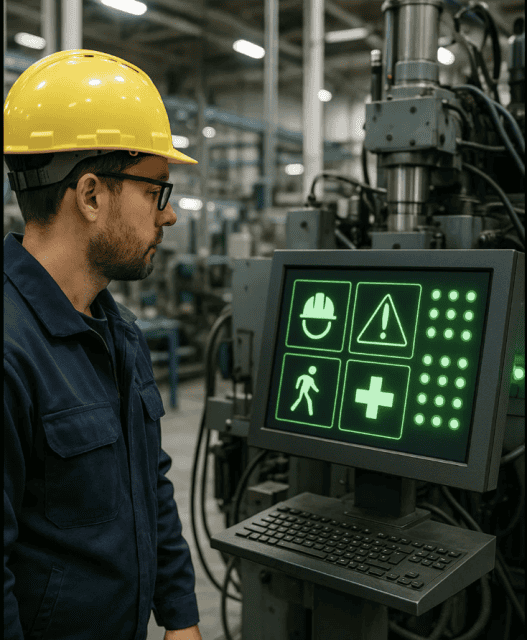
The improvements in safety KPIs facilitated by AI Vision also translate into tangible operational and financial outcomes, such as lower injury rates, improved uptime, better compliance, and enhanced workforce retention. Moreover, the real-time nature of AI Vision dashboards ensures that managers are kept informed and accountable on a daily basis.
Real-World Impact: A Case Study in Logistics
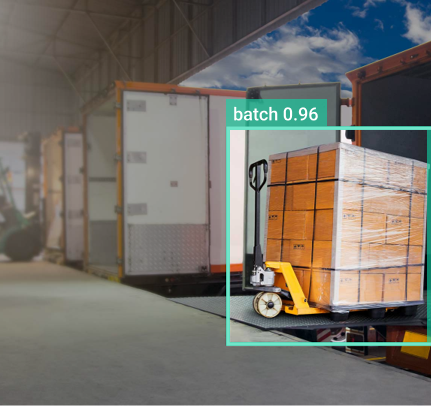
Consider a logistics center where AI Vision was deployed to enhance safety measures. Through the analysis of video data, the team identified previously unreported unsafe interactions, mapped high-risk areas, and implemented interventions that led to a significant reduction in safety violations. This success story not only demonstrated the effectiveness of AI Vision in improving safety but also secured executive support for expanding the initiative company-wide.
Transforming Safety Leaders into Strategic Partners
In today’s business landscape, health and safety teams are no longer viewed solely as compliance entities but as strategic enablers. By leveraging real-time KPIs, trend analysis, cost models, and visibility into high-risk zones, safety leaders can drive performance improvements, shape budgets, and position safety as a competitive advantage.

Seamless Deployment and Integration
One of the key advantages of AI Vision adoption is its seamless integration with existing camera systems, health and safety workflows, and multiple sites. The quick deployment time and minimal disruption make it a scalable investment with significant benefits in terms of safety, productivity, and operational efficiency.
Enhancing Productivity through Safety
AI Vision not only improves safety outcomes but also enhances operational efficiency by identifying and addressing ergonomic risks, obstructed pathways, near-miss events, PPE non-compliance, and unsafe behaviors. By aligning safety improvements with productivity gains, organizations can achieve a more sustainable and profitable operation.
Embracing Safety as a Value Driver
By leveraging AI Vision technology, organizations can transform safety culture from a cost center to a value driver. Real-time KPIs bridge the gap between safety and strategy, showcasing the tangible benefits of safety investments in terms of cost savings, operational efficiency, and workforce well-being.
Ultimately, when safety becomes a strategic priority supported by data-driven insights, organizations can achieve sustainable growth, operational excellence, and a culture of safety that transcends traditional metrics.