The computer vision market, fueled by advancements in generative AI, deep learning, and the widespread adoption of vision AI across various industries, is forecasted to reach $32.88 billion in 2026, with further growth to $68.38 billion by 2031 at a CAGR of 15.77%. While the headline figure is crucial, it signifies the evolution of an industry in flux.
The technologies propelling this growth in 2026 differ significantly from those driving it in 2024 and 2025. Foundation models have supplanted task-specific model training for most commercial applications. Agentic computer vision systems are transitioning from research to operational deployment. Additionally, a new frontier known as Visual General Intelligence is reshaping the landscape of computer vision for enterprises operating in real-world settings.
These are the key computer vision trends for 2026 that practitioners, operators, and technology leaders must grasp.
1. Visual General Intelligence Shifts from Category to Product
The most notable development in computer vision in 2026 is not a novel algorithm or benchmark; it is the emergence of Visual General Intelligence (VGI) as a deployed product category. VGI pertains to AI systems capable of perceiving any physical environment, reasoning about diverse domains, and taking action based on their observations in natural language, without the need for task-specific training data or model development cycles.
Unlike the narrow focus of previous vision AI models, VGI eliminates the need for separate models for each use case by comprehensively understanding its surroundings through context and reasoning, thereby responding to queries in plain language.

viso.ai introduced the foundational white paper on VGI in early 2025 and launched Viso Now, the first self-serve VGI platform, in June 2025. In 2026, VGI is transitioning from a conceptual category to a practical reality, with Vision AI platforms based on VGI architecture already in operational use across industries like manufacturing, logistics, and construction.
Self-building AI vision
Bring a new AI vision application to life.
Transform ideas into tangible computer vision systems.
2. Agentic Computer Vision: Beyond Detection
In 2026, the paradigm of computer vision systems solely producing outputs is evolving. Instead of merely detecting objects or events and generating alerts, agentic computer vision systems now detect, decide, and act autonomously, seamlessly completing workflows from observation to corrective action without human intervention at each stage.
These systems, when identifying a safety breach, can alert the appropriate supervisor with visual evidence, update the EHS system, and initiate corrective actions automatically.
Gartner forecasts that by 2028, 33% of enterprise software applications will incorporate agentic AI, a significant surge from less than 1% in 2024. Computer vision plays a pivotal role in supplying the real-time visual inputs necessary for agentic workflows to analyze and respond to unfolding situations.
Many teams begin by testing the perception layer on their own footage. Viso Now enables users to upload images or videos and describe the system’s identification requirements in simple terms, generating a functional vision application based on the description. This self-serve approach allows organizations to evaluate what their computer vision system can recognize in their environment before integrating it into live operations. Subsequently, Viso Suite manages the connected, agentic aspect: live camera feeds, alert routing, system updates, and workflows that translate detections into actions.
The shift implies a structural change, as computer vision systems no longer only detect but also take action. Entities relying solely on detection-based architectures will face mounting pressure to link the perception layer with operational functions.
3. Foundation Models Overtaking Task-Specific Models
The conventional approach to developing computer vision models, involving data collection, model training, and deployment for specific tasks, is being displaced by foundation models capable of generalizing across tasks without task-specific training data.
Foundation models in computer vision, such as GPT-4o, Gemini 2.5 Pro, and open-source models like InternVL3 and Qwen3-VL, have been fine-tuned on diverse visual data at a scale enabling them to comprehend virtually any scene without retraining. For enterprises, this translates to a significant shift: what previously necessitated months of deep learning development and extensive annotated data can now be deployed in minutes.

The transition is ongoing. While fine-tuned task-specific models still excel in high-precision tasks or specialized applications, foundation models now offer a quicker, more cost-effective, and flexible alternative for most operational monitoring and intelligence requirements. In 2026, teams are focusing on operationalizing foundation models at an enterprise scale rather than deliberating on their adoption.
4. Synthetic Data Matching Real Data for Training
Procuring high-quality real-world training data has historically been a costly and time-consuming aspect of building computer vision models. Generative AI and models are revolutionizing this process by producing synthetic data of comparable quality and scale to real-world data, economically outperforming traditional data collection pipelines.
Generative models now generate synthetic data for training computer vision systems that, in controlled tests, exhibit comparable performance to real-world data in enhancing model accuracy. Synthetic data generation encompasses photorealistic rendered environments, diverse lighting conditions, and AI-generated edge cases, covering scenarios often absent in real-world datasets. Synthetic data generation is notably reducing the time and cost of model development for object detection, defect recognition, and safety monitoring applications.

The trend in 2026 is not the mere existence of synthetic data, a practice employed for years, but rather its maturation. Generative models now produce synthetic training data that matches or surpasses real-world data collection in many tasks, making the labor-intensive annotation process of the past era increasingly optional.
5. Vision Transformers as the Standard Architecture
In 2026, Vision Transformers (ViTs) have established themselves as the default backbone for cutting-edge computer vision models across various applications like object detection, segmentation, depth estimation, and multimodal reasoning. The debate over ViTs versus CNNs, prevalent in 2024 and 2025, has largely settled, with vision transformers emerging as the preferred choice for large datasets and general visual understanding tasks.
Efficient variants of vision transformers, including those powering models like YOLO26 and the InternVL family, now match or surpass earlier-generation cloud models on standard benchmarks while operating on edge hardware. This advancement has made vision transformer-based computer vision models feasible for industrial deployment without cloud connectivity, a key advantage previously attributed to CNN-based architectures in constrained environments.
As a result, the architectural choice for most new computer vision systems no longer poses a significant decision point. The focus has shifted to selecting the appropriate foundation model and suite of AI models and operationalizing them at an enterprise scale.
6. Edge Computing Reaches Deployment Maturity
Edge computing for computer vision has been a prominent trend in annual roundups since at least 2022. In 2026, it has evolved from a trend to a fundamental requirement. Regulatory frameworks such as the EU AI Act and China’s Personal Information Protection Law, penalizing cross-border data transfers, have fueled edge computing growth, projected at a CAGR of 17.29%, the highest among deployment types in the computer vision market.
For industries like manufacturing, pharmaceuticals, government, and environments with unionized workforces, data exiting the premises poses a liability. Real-time processing must occur on-site, where the camera captures the data, and edge hardware conducts the inference.
This instantaneous data is then relayed to the operational system for prompt action without the latency, data sovereignty concerns, or external connectivity dependencies associated with cloud-based processing.
What has transformed in 2026 is not the rationale for edge computing but the hardware enabling it. Compact, energy-efficient AI chips from NVIDIA, Intel, and emerging vendors can now perform state-of-the-art deep learning inference at the edge, a feat that would have necessitated a server rack just a few years ago. Technical barriers are no longer a hindrance.
7. Physical AI Integrates Computer Vision Into the Physical World
Physical AI entails AI systems that perceive, reason, and operate within physical environments. Computer vision serves as the primary perception layer for most physical AI systems, including autonomous vehicles, humanoid robots, robotic assembly arms, autonomous mobile robots in logistics, and AI-powered drones in construction and agriculture.
In 2026, physical AI is transitioning from experimental stages to widespread commercial deployment. Notable examples include Tesla’s Optimus humanoid robots, which commenced production in January 2026, and Agility Robotics’ Digit operating in Amazon fulfillment centers. Autonomous vehicles are also operational in commercial fleets across multiple cities.
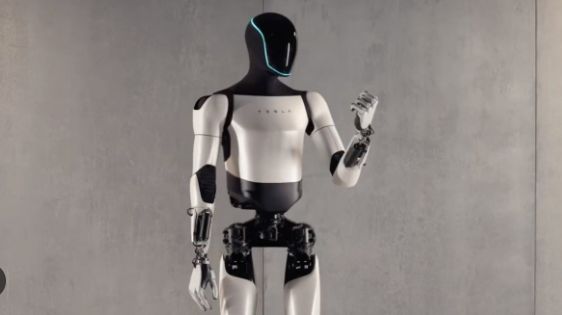
Real-time computer vision is essential for these systems to perceive their surroundings and safely navigate them. Computer vision models no longer solely process images for human review but actively make decisions in real-time in physical environments.
Even for organizations not developing robots, the trend in physical AI remains relevant. The infrastructure supporting large vision models for humanoid robots is equally applicable to camera-based AI systems in factories or logistics facilities, enabling them to comprehend and respond to operational conditions without exhaustive training for every possible scenario.
8. EU AI Act Enforcement Reshapes Computer Vision Deployment Choices
The EU AI Act, transitioning from legislation to enforcement, directly impacts computer vision systems deployed in workplaces. Systems utilizing AI for biometric identification, monitoring employee behavior, or influencing decisions about individuals in professional settings are classified as high-risk under the Act, mandating documented risk assessments, transparency obligations, human oversight mechanisms, and audit-ready records.
Compliance with these regulations cannot be retroactively integrated. Computer vision systems lacking inherent governance, data minimization, and audit trail features face substantial deployment challenges in EU markets and for multinational corporations headquartered in the EU. Privacy-centric, edge-centric architectures have evolved from a distinguishing factor to a prerequisite in such environments.
The regulatory compliance trends in computer vision for 2026 transcend the EU, extending to the UK’s AI Regulation Act, analogous frameworks in Canada and Australia, and the growing state-level regulations in the United States, collectively shaping a global regulatory landscape that demands AI systems designed for accountability rather than post-deployment auditability.
9. Semantic Video Intelligence: Interrogating Footage, Not Merely Observing It
The notable trend in computer vision for 2026 addresses organizations grappling with unanalyzed video footage, a common scenario. Traditional computer vision systems respond to predefined questions, like detecting specific events or objects. Semantic video intelligence revolutionizes this approach by enabling any team member to pose questions about existing footage using natural language, receiving relevant answers without prior configuration, annotation, or manual video review.

In 2026, semantic video intelligence offers an accessible entry point for organizations seeking the benefits of computer vision without the complexities associated with traditional systems. Leveraging existing footage, posing questions in plain language, and receiving prompt responses herald a future where computer vision adds value to visual data already in possession by most organizations.
The Outlook for Computer Vision in 2026 and Beyond
The future of computer vision does not lie in expanding the scope of detectors but in systems that comprehend and engage with the real world at a comprehensive level, act autonomously without human intervention for every output, and align with the infrastructure demanded by physical environments.
The computer vision trends for 2026 converge on a common trajectory: from specialized and trained to universal and operational, from detection to action, and from cloud-reliant to edge-optimized. Organizations anchoring their AI Vision infrastructure on this generation of technology will amplify their competitive edge with each deployment. Conversely, those persisting with prior-generation technologies risk falling behind as the gap widens.