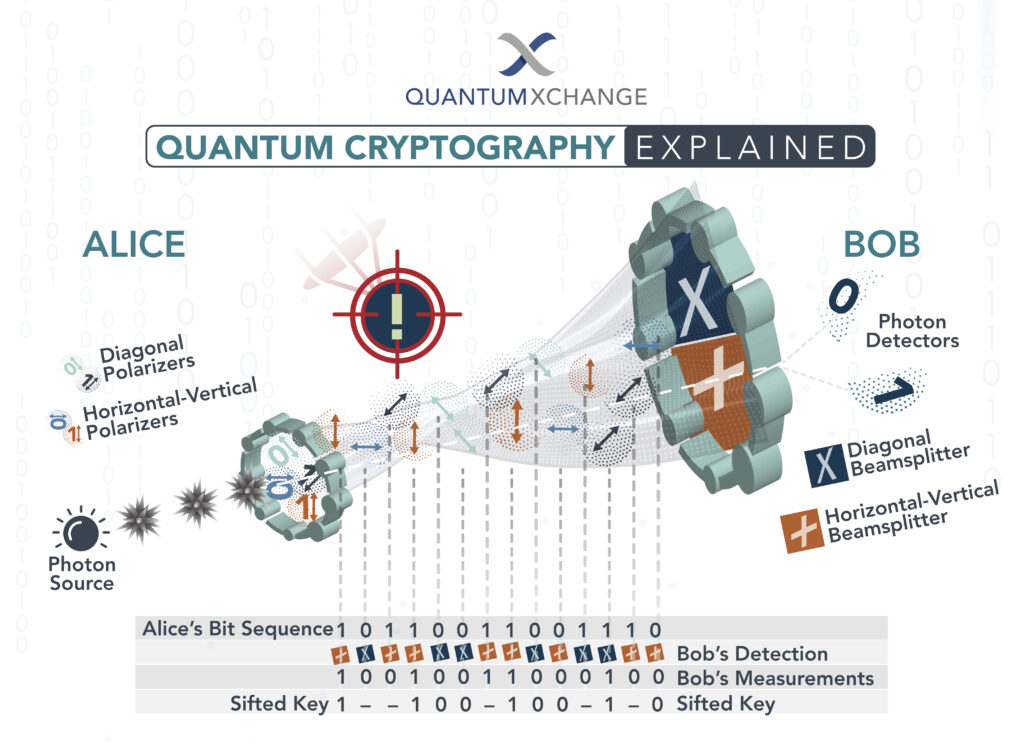
Quantum cryptography is a cutting-edge technology that offers unparalleled security in information exchange. Unlike traditional cryptography, which relies on mathematical algorithms and keys, quantum cryptography utilizes the principles of quantum mechanics to secure communication channels. This makes it virtually impossible for hackers to intercept or tamper with the data being transmitted.
At the core of quantum cryptography is the phenomenon of quantum entanglement. This is when two particles, such as photons, become linked in a way that their states are correlated. By using entangled photons, quantum cryptography can create a shared secret key between two parties that can be used to encrypt and decrypt messages. The beauty of this system is that any attempt to eavesdrop on the communication will disrupt the entanglement, making it immediately apparent that the channel has been compromised. In this way, quantum cryptography provides a level of security that is not possible with traditional encryption methods.
Quantum cryptography is a method of transmitting data securely over an open, public network. It uses the principles of quantum mechanics to ensure that data cannot be read or intercepted by an unauthorized third party. It works by encoding data in qubits, or quantum bits, which can travel over a physical medium such as a fiber-optic cable. Once the data is received, the qubits are converted into a readable format. Quantum cryptography is a secure way to send and receive data over a public network, as it is virtually impossible to tamper with the data without being detected.
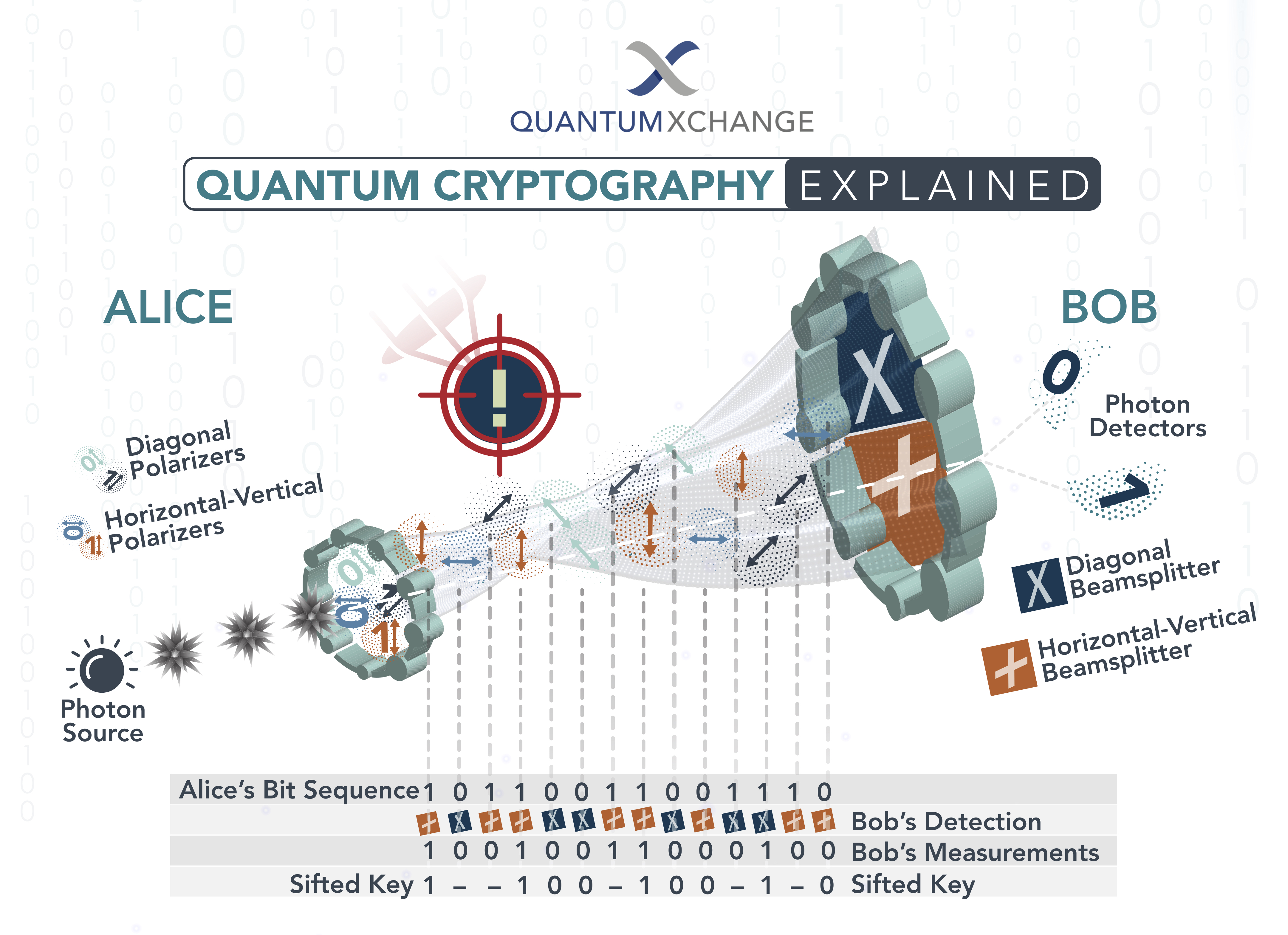
What is quantum cryptography?
Quantum cryptography is a form of communication security that takes advantage of the properties of quantum mechanics to protect data transmission. It is based on the principle of quantum entanglement, which allows for secure communication over a distance. Quantum cryptography is a rapidly emerging field that has the potential to revolutionize the way we communicate securely.
The key advantage of quantum cryptography is its ability to provide absolute security for data transfer. Unlike traditional cryptography, which relies on mathematical algorithms, quantum cryptography utilizes the natural properties of quantum particles to ensure that data is transmitted securely. This makes it much more secure than traditional methods, as it is virtually impossible to crack.
How Does Quantum Cryptography Work?
The Basics of Quantum Cryptography
Quantum cryptography works by exploiting the properties of quantum particles. These particles behave differently to classical particles, and can be used to create secure encryption keys. These keys are composed of two different types of particles, which are known as qubits. These qubits are entangled, meaning that the state of one affects the state of the other.
When two parties want to communicate securely, they use the qubits to create an encryption key. This key is then used to encrypt the data that is being transferred. The data is then sent to the other party, who uses the same encryption key to decrypt it. This ensures that the data is secure, as the encryption key cannot be cracked by a third party.
Implementing Quantum Cryptography
Quantum cryptography can be implemented in a variety of ways. One of the most popular methods is known as quantum key distribution (QKD). In this method, a quantum key is first created between two parties. This quantum key is then used to encrypt data that is sent between the two parties. As the quantum key is constantly changing, it is virtually impossible to crack by a third party.
Another popular method of implementing quantum cryptography is known as quantum secure direct communication (QSDC). In this method, a secure connection is established between two parties, and data is transferred directly without the need for an encryption key. This makes it even more secure, as data is transferred without the need for a third party.
The Benefits of Quantum Cryptography
The main benefit of quantum cryptography is its ability to provide absolute security for data transmission. Unlike traditional cryptography, which relies on mathematical algorithms, quantum cryptography utilizes the natural properties of quantum particles to ensure that data is transmitted securely. This makes it much more secure than traditional methods, as it is virtually impossible to crack.
In addition, quantum cryptography is also much faster than traditional cryptography. This is because the quantum particles move much faster than classical particles, allowing for faster data transmission. This makes it ideal for use in high-speed communication networks, such as the Internet.
The Limitations of Quantum Cryptography
The main limitation of quantum cryptography is its cost. As the technology is still in its early stages, it is much more expensive than traditional cryptography. This makes it difficult to implement in many applications, as the cost of implementation can be prohibitively expensive.
In addition, quantum cryptography is also limited by the distance that it can be used over. This is because the quantum particles that are used to create the encryption key can only travel a certain distance before they start to degrade and become unusable. This means that quantum cryptography can only be used over relatively short distances.
Frequently Asked Questions
Quantum cryptography is a method of securely encrypting data using the principles of quantum mechanics. It provides a higher level of security than traditional cryptography and is used to protect data from theft or tampering.
What is quantum cryptography?
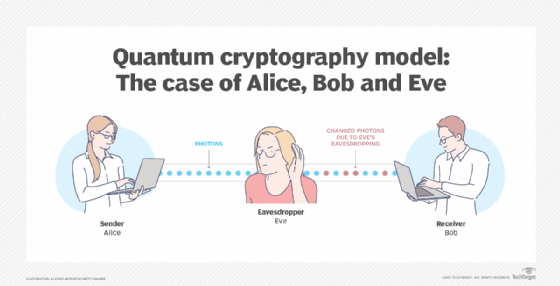
Quantum cryptography is a method of securely encrypting data using the principles of quantum mechanics. It is an emerging field of cryptography which uses the principles of quantum mechanics to secure communications. Quantum cryptography is based on the idea that an eavesdropper attempting to intercept a communication will disturb the quantum state of the system, thus alerting the sender and receiver that their communication is no longer secure.
Quantum cryptography is used to protect data from theft or tampering, as well as to protect data from being intercepted or read by unwanted third parties. It is also used to verify the authenticity of a message by allowing the sender and receiver to share a secret key. This key can then be used to verify the authenticity of the message.
How does quantum cryptography work?
Quantum cryptography works by sending a signal over a quantum channel, such as a fiber optic cable. This signal is composed of photons, which are tiny particles of light. When the signal is sent, the photons become entangled with each other, meaning that they become linked in a way that is impossible to replicate.
When the signal is received, the receiver measures the state of the photons and compares it to the known state of the signal. If the states match, then the signal is authentic and the data is secure. If the states do not match, then the signal has been tampered with and the data is no longer secure.
In this way, quantum cryptography provides a higher level of security than traditional cryptography. It ensures that no third party can intercept the data and that the sender and receiver can be sure that the data is authentic and secure.
What are the benefits of quantum cryptography?
The main benefits of quantum cryptography are its security and its ability to provide authentication. Quantum cryptography is more secure than traditional cryptography because it is impossible to replicate the quantum state of the signal, meaning that any attempt to intercept the signal would be detected.
In addition, quantum cryptography can be used to verify the authenticity of a message. By sharing a secret key, the sender and receiver can be sure that the message is authentic and has not been tampered with. This is especially important in banking, government, and military applications, where data must be kept secure and authentic.
What are the drawbacks of quantum cryptography?
The main drawback of quantum cryptography is its cost. Quantum cryptography requires specialized equipment and is more expensive than traditional cryptography. In addition, there are limits to the distance over which a quantum signal can be sent, and there are challenges in terms of the speed at which a quantum signal can be sent.
Another drawback is that quantum cryptography is not yet widely adopted. It is still a relatively new technology, and some organizations are still hesitant to adopt it.
What is the future of quantum cryptography?
The future of quantum cryptography is bright. As the technology becomes more widely adopted, the cost of quantum cryptography will decrease and more organizations will be able to take advantage of its security benefits.
In addition, research is ongoing to further improve the security and reliability of quantum cryptography. For example, researchers are exploring ways to increase the distance over which a quantum signal can be sent and to increase the speed at which it can be sent.
Ultimately, quantum cryptography has the potential to revolutionize the way data is encrypted and secured. It is a powerful tool for protecting data from theft and tampering, and for verifying the authenticity of messages.
In conclusion, quantum cryptography is a fascinating technology that has the potential to revolutionize the way we communicate and secure sensitive information. By taking advantage of the strange and counterintuitive properties of quantum mechanics, it offers a level of security that is impossible to achieve with classical cryptography. With the increasing importance of data privacy and security in today’s digital world, quantum cryptography is poised to become an essential tool for businesses, governments, and individuals alike.
While there are still many challenges to overcome, the progress made in recent years suggests that quantum cryptography is rapidly approaching commercial viability. As the technology continues to evolve and mature, we can expect to see more applications for it in a variety of fields, from finance and healthcare to national security and beyond. As a professional writer, I believe that it is crucial for all of us to stay informed about the latest developments in quantum cryptography and to explore the ways in which it can benefit society as a whole.