Automotive wiring harnesses can benefit greatly from the use of fiber optics, providing solutions for lightweight, high bandwidth, and electromagnetic compatibility (EMC) needs. This article will explore the advantages of incorporating fiber optics in automotive wiring harnesses, focusing on its support for media-oriented system transport (MOST) networks and advanced driver assistance systems (ADAS).
Looking ahead, the article will discuss the ongoing development of fiber optic connectivity for connected, autonomous, shared, and electric (CASE) vehicles. It will also touch on the sustainability benefits of using fiber optics in automotive applications.
In modern automotive wiring harnesses, a combination of fiber optics and copper wiring is often used. Fiber optic links enable the transmission of high-bandwidth data signals for various applications such as ADAS, entertainment systems, and safety controls. They are particularly effective in transmitting complex video signals and data from multiple sensors to a central electronic control unit (ECU).
One way to achieve high bandwidth support is through the use of OM3 multimode fiber optic cables, which feature a 50-micron glass core and an 850 nm vertical-cavity surface-emitting laser (VCSEL) light source. This approach offers several benefits, including compact and lightweight solutions, flexibility in cable routing, immunity to electromagnetic interference (EMI), and improved sustainability.
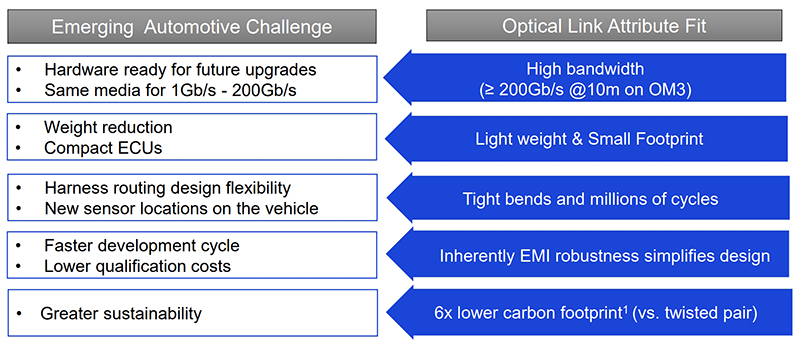
Figure 1. Using fiber optics results in multiple benefits in automotive wiring harnesses. (Image: IEEE Standards Association)
MOST and ADAS
Plastic optical fiber (POF) is capable of supporting MOST and ADAS applications. Various MOST versions, such as MOST25, MOST50, and MOST150, exist. MOST25, for instance, utilizes a POF with a 1mm core and LEDs emitting red light. On the other hand, MOST50 and MOST150 support both optical and electrical interconnects.
With the increasing sophistication of in-vehicle multimedia systems, there is a growing demand for high bandwidth to integrate high-definition video and surround camera systems in real-time. Fiber optics play a crucial role in enabling these applications, including safety networks and control networks for various vehicle functions.
One promising ADAS application for fiber optics is automatic braking, leveraging the technology’s speed and immunity to EMI to enhance system reliability.
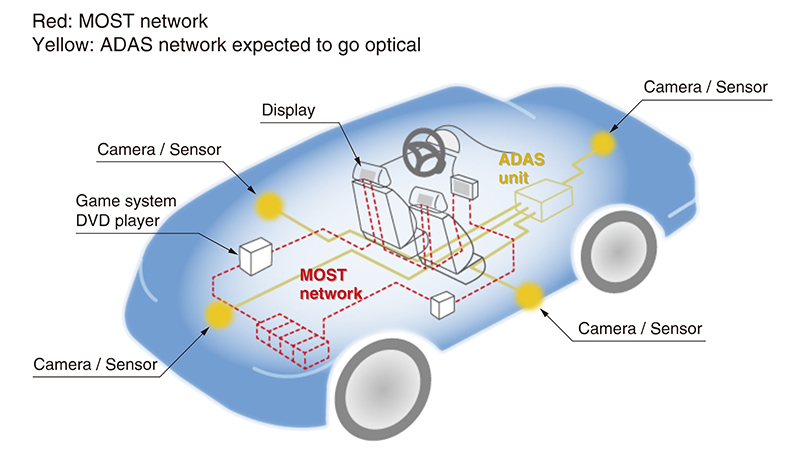
Figure 2. The MOST network (red) is already based on fiber optic connectivity, and ADAS (yellow) is transitioning to fiber optics. (Image: Hamamatsu)
Enabling CASE
New optical wiring harness concepts are being developed to support connected, autonomous, shared, and electric (CASE) vehicles. These innovations include harnesses with transmission speeds exceeding 10 Gbps to accommodate high-resolution sensors like LiDAR, Radar, and cameras. Additionally, a unique optical signal-splitting function is being integrated into these harnesses.
A polymer-based optical waveguide has been designed to passively split optical signals, supporting simultaneous transmission from high-resolution sensors to the ADAS ECU and a display in the vehicle’s cabin.
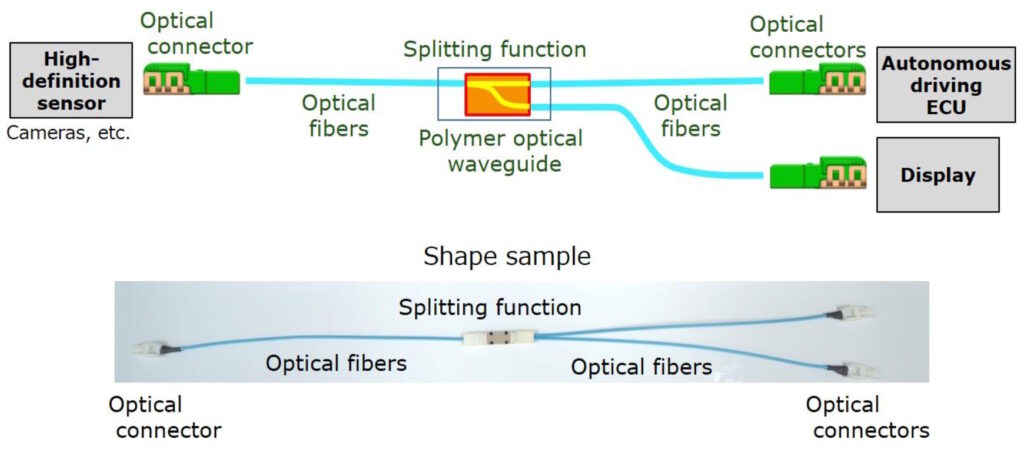
Figure 3. A polymer-based optical waveguide splitter function has been proposed for fiber optic wiring harnesses. (Image: Sumitomo Electric)
Sustainability
Optical connectivity not only offers performance benefits but also contributes to the sustainability of automotive wiring harnesses. By using light pulses for data transmission, fiber optics consume less energy compared to electrical signaling. Moreover, the production of glass and plastic optical fibers has a lower environmental impact than mining copper for traditional cabling options.
Glass fibers are manufactured from abundant materials like sand, while plastic optical fibers can be made from recycled materials such as Poly(methyl methacrylate) (PMMA) and polyethylene terephthalate (PET). These materials are widely used in packaging and are just as recyclable as copper conductors.
References
Advanced Multigigabit Glass Optical Fiber Automotive Ethernet Link and Test Solutions, IEEE Standards Association
EMC-safe and Robust Automotive Gigabit Connectivity, KDPOF
Fiber Optic Connections for MOST Networks, TE Connectivity
In the vehicle multimedia network, Hamamatsu
Sumitomo Electric Accelerates the Development of Automotive Optical Harnesses for Practical Use in 2026, Sumitomo Electric
The Future of Automotive Wiring Design: Trends and Predictions, Cadonix
WTWH related links
How are terahertz connectors different?
What multidrop SPE architectures are there to choose from?
Smarter, safer, cheaper: How Ethernet will enable the car of the future
The future of autonomy for on-highway vehicles
What are ZIF and LIF connectors and where are they used?