As technology continues to advance, we are constantly finding new and innovative ways to improve our daily lives. One such innovation is the development of artificial intelligence, which has opened up a whole world of possibilities for businesses and individuals alike. OpenAI is one such platform that has been making waves in the field of AI research, with its powerful algorithms and cutting-edge technology. Among its many tools, Whisper is a particularly useful feature that can help you take your AI projects to the next level.
If you’re new to the world of AI, you might be wondering how to run Whisper OpenAI. Fortunately, getting started is easier than you might think. With just a few simple steps, you can begin using this powerful tool to generate high-quality text for a range of applications. Whether you’re a business owner looking to improve your marketing campaigns or a researcher looking to explore the latest advances in AI technology, Whisper OpenAI is a valuable tool that can help you achieve your goals. In this guide, we’ll walk you through everything you need to know to get started with Whisper OpenAI, from setting up your account to generating your first text outputs. So, let’s get started!
1. Install OpenAI’s Gym Package: This can be done using the “pip install gym” command.
2. Create a new Python file: To run whisper OpenAI, you need to create a new Python file and import the gym package.
3. Import the necessary libraries: Import the necessary libraries such as Numpy, TensorFlow, and Matplotlib.
4. Train the OpenAI agent: Use OpenAI’s Gym package to train the agent. This can be done by creating an environment and feeding the agent with observations and rewards.
5. Run the agent: After the training is complete, you can run the agent using the “env.step” command.
6. Evaluate the results: Finally, evaluate the results of the agent’s performance.
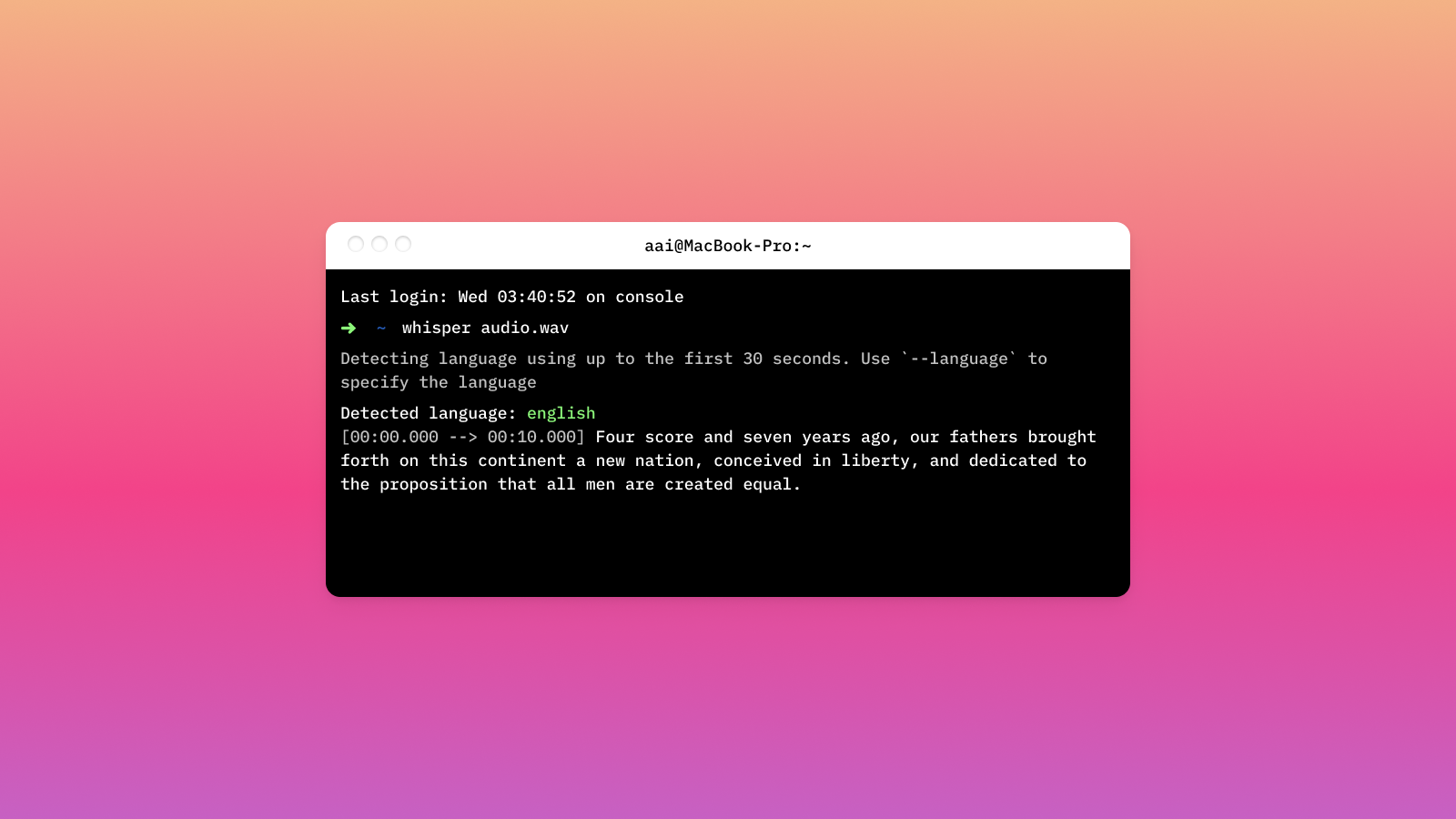
How to Run OpenAI’s Whisper
OpenAI’s Whisper is an open-source text-to-speech toolkit that is designed to make natural-sounding voice synthesis easy and accessible. In this article, we will discuss how to set up and run OpenAI’s Whisper on your system.
Step 1: Install the Necessary Dependencies
Before you can run Whisper, you will need to install several dependencies on your system. The following packages are required: Python 3.6 or higher, TensorFlow 1.14 or higher, and PyTorch 1.3 or higher. Additionally, you will need to install the OpenAI GPT-2 model and its associated dependencies.
Step 2: Download the Whisper Code and Data
Once you have the necessary dependencies installed, you will need to download the Whisper code and data. The code and data can be found on GitHub: https://github.com/openai/whisper. Once you have downloaded the code and data, you will need to unzip them and place them in your working directory.
Step 3: Train the Model
Once you have the code and data in place, you will need to train the model. To do this, you will need to run the following command:
python3 whisper_train.py --data_dir ./data --model_dir ./model
This command will begin the training process and will take some time to complete.
Step 4: Generate Synthetic Speech
Once the training process is complete, you can generate synthetic speech by running the following command:
python3 whisper_synthesize.py --model_dir ./model
This command will generate synthetic speech based on the model you trained. You can also generate synthetic speech in real-time by passing text to the command line.
Step 5: Configure and Run Whisper
Once you have the model trained and the synthetic speech generated, you will need to configure and run Whisper. To do this, you will need to create a configuration file. This file will contain information such as the model directory, the audio output directory, and the sampling rate.
Once the configuration file is created, you can run Whisper by running the following command:
python3 whisper.py --config_file ./config.yaml
This command will start Whisper running and will generate synthetic speech based on the configuration file.
Step 6: Evaluate the Model
Once you have Whisper running, you will need to evaluate the model to ensure that it is producing the desired results. To do this, you can use the Whisper evaluation scripts. These scripts will measure the accuracy and quality of the synthetic speech.
Once you have evaluated the model, you can make any necessary adjustments to the model or the configuration file.
Step 7: Deploy the Model
Once you have evaluated and adjusted the model, you can deploy it to a production environment. This can be done by running the Whisper server, which will allow you to serve the synthetic speech to clients.
Step 8: Monitor and Maintain the Model
Once the model is deployed, you will need to monitor and maintain it to ensure that it is working correctly. This can be done by running automated tests and monitoring the performance of the model. Additionally, you may need to periodically retrain the model to ensure that it is up-to-date.
Frequently Asked Questions
Whisper OpenAI is an open source AI library for natural language processing. It is used to build conversational applications and services.
What is Whisper OpenAI?
Whisper OpenAI is an open source library for natural language processing (NLP). It provides an easy-to-use API for building conversational applications and services. It has been developed to make it easier for developers to create applications that can understand natural language and interact with users.
Whisper OpenAI is powered by a deep learning model called BERT, which is trained on a large corpus of text data. This model can be used to understand natural language and generate meaningful responses. It also supports a range of features such as dialogue management, natural language understanding, and natural language generation.
How to run Whisper OpenAI?
To run Whisper OpenAI, you will need to install the library on your computer. The installation process is simple and straightforward. You can find the installation instructions on the Whisper OpenAI website.
Once you have installed the library, you can start using it to create conversational applications. You can use the API to build your own dialogue system, natural language understanding, and natural language generation. You can also use the API to access the BERT model, which can be used to understand natural language and generate meaningful responses.
What features does Whisper OpenAI provide?
Whisper OpenAI provides a range of features for building conversational applications. It includes features for dialogue management, natural language understanding, and natural language generation. It also provides access to the BERT model, which can be used to understand natural language and generate meaningful responses.
In addition, Whisper OpenAI provides an API for accessing the BERT model, as well as a range of pre-built models for dialogue management and natural language understanding. These models can be used to quickly create applications that understand natural language and generate meaningful responses.
What are the benefits of using Whisper OpenAI?
Whisper OpenAI offers a range of benefits for developers and users. It is an open source library, which means that it can be used freely by anyone. It is also easy to use, with a simple API that makes it easy to create conversational applications.
In addition, Whisper OpenAI is powered by the BERT model, which is trained on a large corpus of text data. This model can be used to understand natural language and generate meaningful responses. It also provides access to a range of pre-built models for dialogue management and natural language understanding.
Where can I find more information about Whisper OpenAI?
More information about Whisper OpenAI can be found on the Whisper OpenAI website. The website provides detailed documentation, tutorials, and a range of resources for developers. It also provides links to the source code, which can be used to modify and extend the library.
In conclusion, running Whisper OpenAI is not as daunting as it may seem at first glance. With a little bit of technical know-how and some patience, anyone can learn to use this powerful tool to their advantage. Whether you are a budding writer looking to improve your craft, or a business owner seeking to gain a competitive edge, Whisper OpenAI can help you achieve your goals.
In today’s fast-paced world, staying ahead of the curve is essential. By harnessing the power of AI and machine learning, Whisper OpenAI can give you an edge over the competition. So why wait? Start exploring the possibilities of this cutting-edge technology today, and see how it can transform your writing and your business. With Whisper OpenAI, the sky’s the limit!