Quantum cryptography is a fascinating field of study that has the potential to revolutionize the way we communicate and secure our information in the digital age. Unlike traditional cryptography methods that rely on mathematical algorithms, quantum cryptography leverages the principles of quantum mechanics to ensure the security of data transmission. But what exactly is quantum cryptography, and how does it work?
At its core, quantum cryptography is a technique that uses quantum properties to exchange secret information in a secure manner. The fundamental principle behind this technology is that quantum states cannot be measured or copied without changing their properties, making it impossible for an eavesdropper to intercept the information being transmitted without being detected. In this article, we will delve deeper into the intricacies of quantum cryptography, exploring the key concepts and applications of this cutting-edge technology.
What Is Quantum Cryptography?
Quantum cryptography is a method of secure communication that uses the principles of quantum mechanics to encrypt and decrypt messages. It is a form of cryptography that uses the power of quantum mechanics to protect data from unauthorized access. Quantum cryptography is considered to be the most secure form of encryption because it is impossible to crack or decrypt messages without the exact key used to encrypt the message.
The basis of quantum cryptography is the Heisenberg uncertainty principle, which states that the exact position and momentum of a particle cannot be known at the same time. This principle is used to create an element of randomness in the encryption process, making it impossible for an eavesdropper to decrypt the message without the exact key used to encrypt it.
How Does Quantum Cryptography Work?
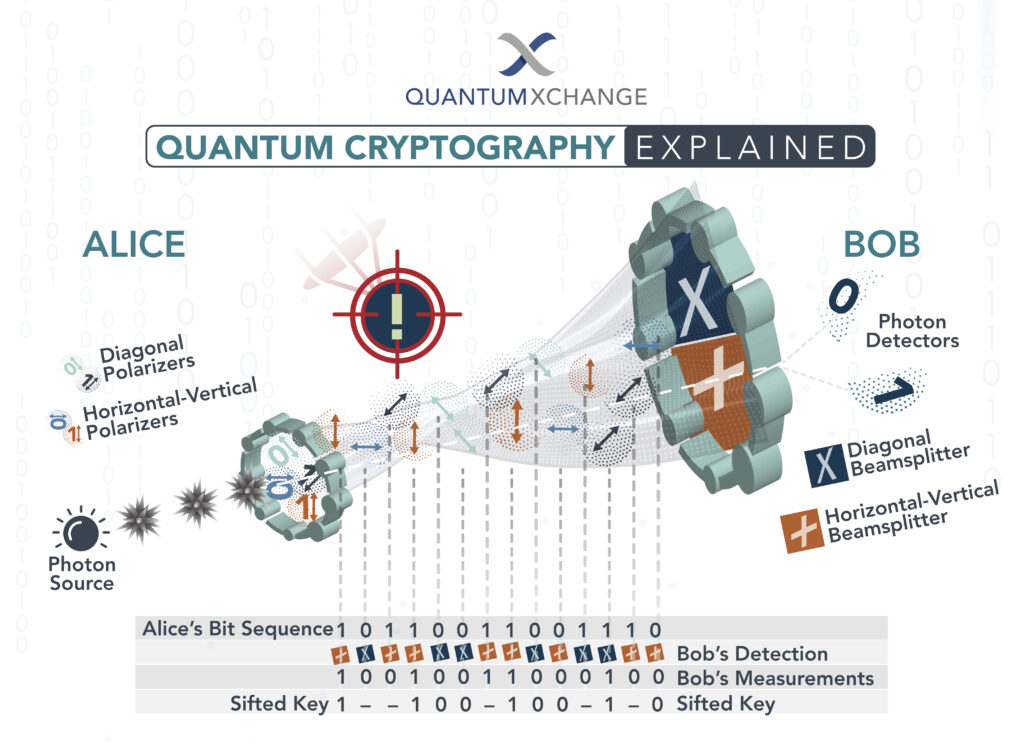
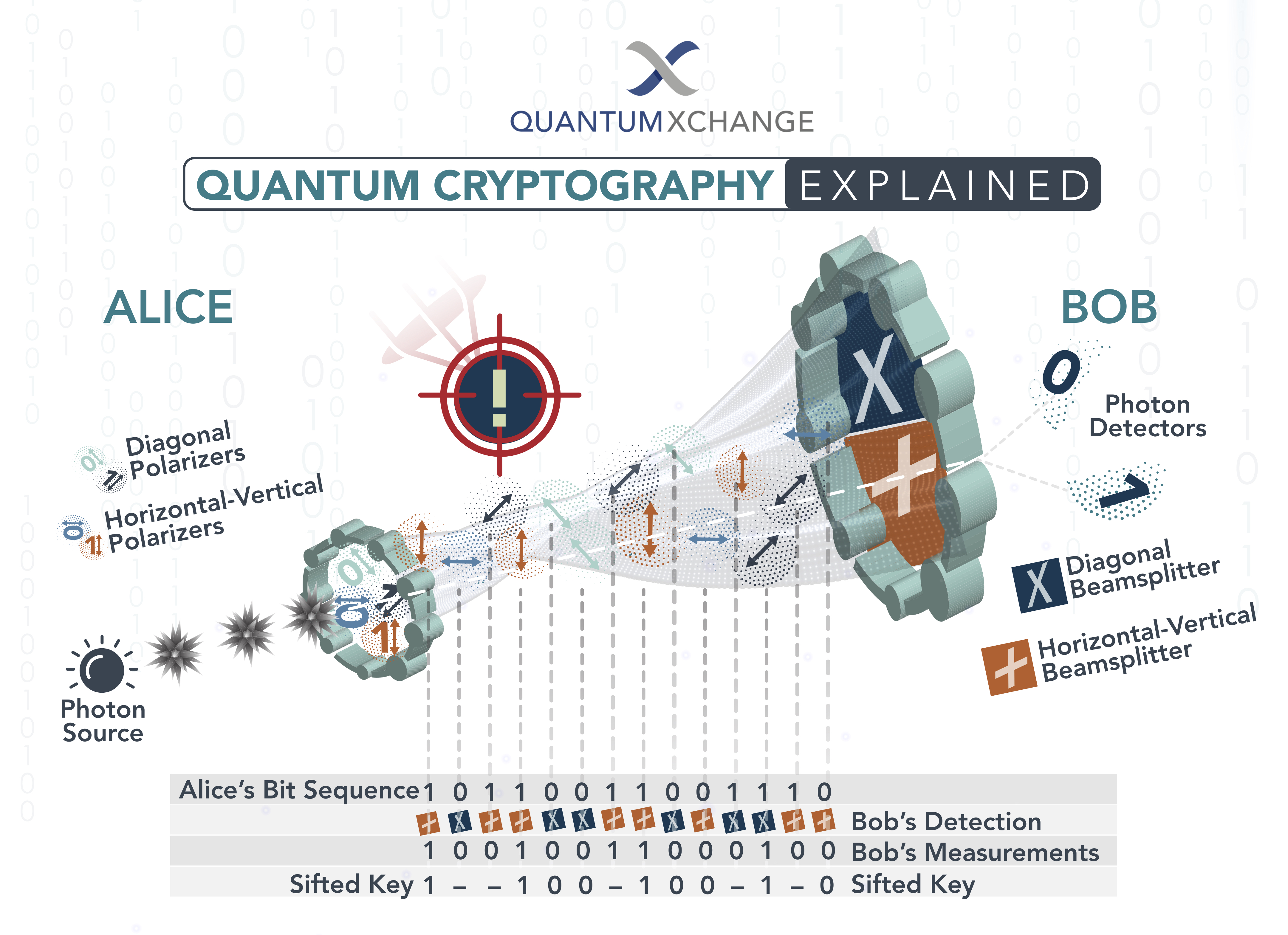
Quantum cryptography works by encoding a message in a quantum state and then transmitting it over a communications channel. The message is encoded in a way that ensures only the intended recipient can read it. For example, a sender might encode the message using a quantum state such as a single photon or an entangled pair of photons, and then transmit this quantum state over an optical fiber, or through the air.
Once the message is transmitted, the recipient can then read the message by measuring the quantum state. This process is known as quantum key distribution (QKD) and is the basis of quantum cryptography. By using QKD, the sender and receiver can create a shared key that is used to encrypt and decrypt the message. This shared key is impossible to crack or decrypt without the exact key used to encrypt the message.
Advantages of Quantum Cryptography
The primary advantage of quantum cryptography is its security. As mentioned, it is impossible to crack or decrypt messages without the exact key used to encrypt the message. This makes it the most secure form of encryption available.
Another advantage of quantum cryptography is its scalability. It can be used for both short-range and long-distance communication, making it ideal for applications such as secure banking transactions, military communications, and secure communication between government departments.
Finally, quantum cryptography can be used to create secure connections between two or more parties without the need for a third party or central authority. This makes it ideal for applications such as secure communication between two or more organizations.
Disadvantages of Quantum Cryptography
The primary disadvantage of quantum cryptography is its complexity. It requires a great deal of technical expertise and resources to implement, making it costly and time-consuming.
Additionally, quantum cryptography is vulnerable to quantum hacking. This is the process of exploiting a quantum system to gain access to the information it is protecting. As such, it is important to take steps to protect against quantum hacking, such as using quantum-safe algorithms and protocols.
Finally, quantum cryptography is still a relatively new technology, and as such, it is still subject to change and evolution. This means that it is important to regularly update and upgrade quantum systems to ensure they remain secure.
Conclusion
Quantum cryptography is a method of secure communication that uses the principles of quantum mechanics to encrypt and decrypt messages. It is the most secure form of encryption available and can be used for both short-range and long-distance communication. While it has its advantages, such as scalability and security, it also has its disadvantages, such as complexity and vulnerability to quantum hacking. As such, it is important to take steps to protect against quantum hacking and regularly update and upgrade quantum systems.
Frequently Asked Questions – Quantum Cryptography
Quantum cryptography is an emerging technology that uses the principles of quantum mechanics to protect data and communications. It is seen as an important step forward in cyber security as it offers a higher level of security than traditional encryption techniques.
What is Quantum Cryptography?
Quantum cryptography is a type of encryption technology that uses the principles of quantum mechanics to secure data. It is based on the idea that data is encoded in a way that can only be decrypted by the intended recipient, making it virtually impossible for unauthorized users to access the data. Quantum cryptography also provides the ability to determine whether a message has been intercepted or tampered with, adding an extra layer of security.
How Does Quantum Cryptography Work?
Quantum cryptography works by encoding data using photons, or particles of light. These photons are then sent to the intended recipient, who uses a special quantum key to decode the data. The key is generated using an algorithm that is based on the principles of quantum mechanics, making it impossible for anyone to guess the key or the encoded data. The data is also encrypted in a way that makes it impossible to intercept or tamper with, adding an extra layer of security.
What are the Benefits of Quantum Cryptography?
Quantum cryptography offers a number of benefits over traditional encryption methods. It is virtually impossible to break, making it ideal for protecting sensitive data. It also provides the ability to detect whether a message has been tampered with, making it ideal for secure communications. Finally, the use of quantum mechanics makes it impossible to intercept or decrypt the data without the correct key, making it an extremely secure option for protecting data.
What is the Difference Between Quantum Cryptography and Traditional Encryption?
The main difference between quantum cryptography and traditional encryption is that quantum cryptography uses the principles of quantum mechanics to secure data, whereas traditional encryption uses mathematical algorithms. As a result, quantum cryptography offers a higher level of security than traditional encryption, making it ideal for protecting sensitive data.
What is the Future of Quantum Cryptography?
The future of quantum cryptography is bright. As more organizations become aware of the benefits that it offers, it is likely that it will become increasingly popular as a way to protect data and communications. Additionally, advances in quantum computing could further increase the security of quantum cryptography, making it even more secure than it is today.
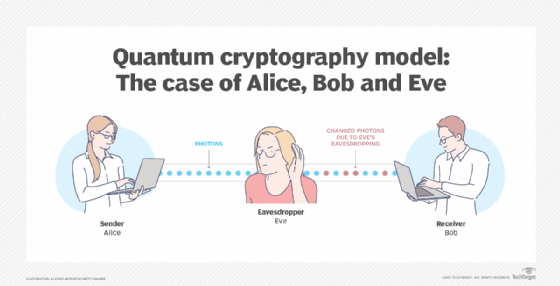
In conclusion, quantum cryptography is a sophisticated technique that harnesses the principles of quantum mechanics to provide a secure and unbreakable method of communication. By using quantum properties, such as the entanglement of particles and the uncertainty principle, quantum cryptography can ensure that any attempt to intercept or tamper with a message will be detected. This makes it an ideal solution for applications that require absolute security, such as military and government communications, financial transactions, and medical records.
As technology continues to advance, the need for secure communication will only become more urgent. Quantum cryptography offers a promising solution that is already being used by organizations around the world. While it is not without its challenges and limitations, it represents a significant step forward in the ongoing battle to keep our data and communications safe from prying eyes. As we continue to explore the possibilities of quantum mechanics, it is likely that we will see even more innovative applications of this fascinating technology in the years to come.