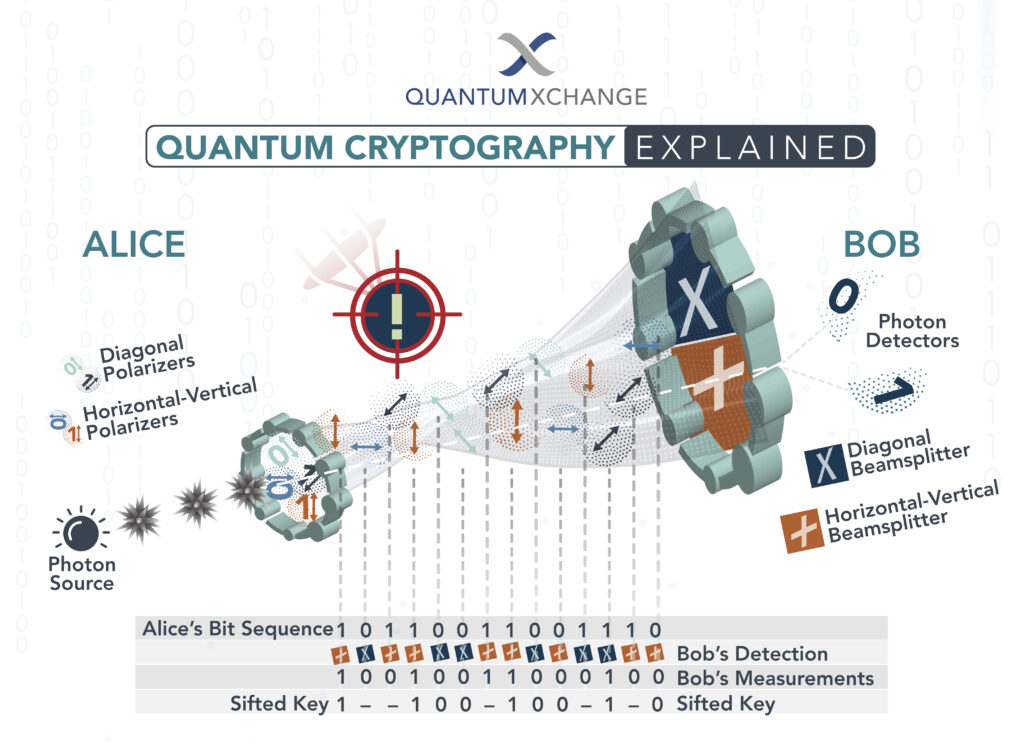
Quantum cryptography is an exciting field that has taken the world of cryptography by storm. It is a cutting-edge technology that is based on the principles of quantum mechanics and is used to secure communication channels. With its ability to provide unbreakable encryption, quantum cryptography has become increasingly popular in recent years. But what exactly is quantum cryptography used for, and how does it work?
At its core, quantum cryptography is all about ensuring that the information being transmitted between two parties is secure and cannot be intercepted by any third party. This is achieved by using quantum mechanics to create a secure communication channel that is virtually unbreakable. Unlike traditional encryption methods that rely on complex algorithms to encode data, quantum cryptography uses the principles of physics to ensure that data is secure. This makes it an ideal solution for a wide range of applications, including secure communication between governments, financial institutions, and even individuals who want to protect their private information.
Quantum cryptography is used to secure communication over the internet. It relies on the principles of quantum mechanics to ensure that the communication is secure and that the data is not tampered with. Quantum cryptography is used to encrypt data and verify that the data is authentic and has not been altered. It also allows for secure communication between two parties, even if the communication is intercepted. Quantum cryptography is an important tool in keeping data safe and secure.
What is Quantum Cryptography Used For?
Quantum cryptography, also known as quantum key distribution (QKD), is a secure communication method that uses quantum mechanical properties to exchange keys for encrypting and decrypting data. It is used in a variety of applications, including secure data transfer, secure communication networks, secure digital signatures, and secure authentication. Quantum cryptography is different from traditional cryptography as it provides a much higher level of security. It is also more difficult to break as it involves the use of quantum mechanical principles.
Quantum Key Distribution
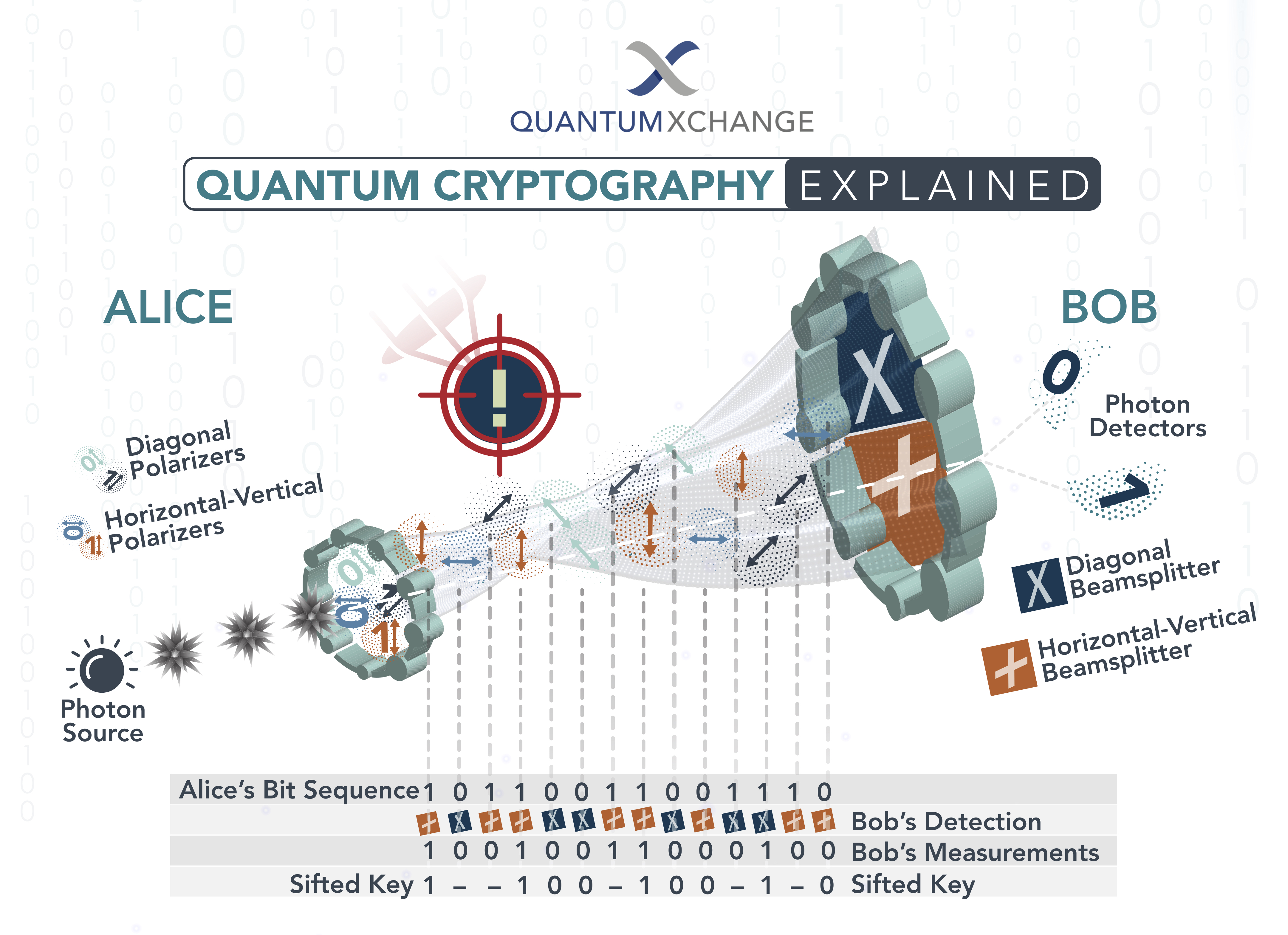
Quantum key distribution (QKD) is a secure communication protocol based on the principles of quantum mechanics. It is used to securely exchange a cryptographic key between two parties, usually over a public communications channel. In QKD, the two parties exchange a series of qubits (quantum bits) in order to generate a shared secret key. The key is then used to encrypt and decrypt messages, providing a secure communication channel.
QKD is useful in a variety of applications, including secure data transfer, secure communication networks, secure digital signatures, and secure authentication. It is also used in secure key exchange protocols, such as the Diffie-Hellman key exchange. QKD is more secure than traditional cryptography as it relies on quantum mechanical principles, making it more difficult for attackers to break the encryption.
Secure Data Transfer
Quantum cryptography can be used to securely transfer data over public networks. This is because the quantum key generated by QKD is impossible to compromise by traditional methods. This makes it ideal for secure data transfer, as the data is protected from interception and tampering. QKD can also be used to authenticate data, ensuring that only the intended recipient can access the data.
QKD is also useful for securely transferring data between two parties located in different locations. This is because the quantum key can be securely transferred over long distances, ensuring the security of the data. QKD can also be used to securely transfer data between two parties in different countries, as it is not affected by international borders.
Secure Communication Networks
Quantum cryptography can be used to create secure communication networks. This is because the quantum key generated by QKD can be used to encrypt and decrypt messages, ensuring the security of the data. QKD is also useful for authenticating users, as the quantum key can be used to verify the identity of the user. This makes it ideal for use in secure communication networks, as it ensures the security of the data and prevents unauthorized access.
QKD can also be used to securely transfer data over long distances, making it ideal for use in global communication networks. This is because the quantum key can be securely transferred over long distances, ensuring the security of the data. QKD can also be used to securely transfer data between two parties in different countries, as it is not affected by international borders.
Secure Digital Signatures
Quantum cryptography can be used to create secure digital signatures. This is because the quantum key generated by QKD can be used to authenticate the user, ensuring that only the intended recipient can view the data. QKD is also useful for authenticating digital signatures, as the quantum key can be used to verify the identity of the signer. This makes it ideal for use in secure digital signatures, as it ensures the security of the data and prevents unauthorized access.
QKD can also be used to securely transfer data over long distances, making it ideal for use in digital signature systems. This is because the quantum key can be securely transferred over long distances, ensuring the security of the data. QKD can also be used to securely transfer data between two parties in different countries, as it is not affected by international borders.
Secure Authentication
Quantum cryptography can be used to authenticate users. This is because the quantum key generated by QKD can be used to authenticate the user, ensuring that only the intended recipient can access the data. QKD is also useful for authenticating digital signatures, as the quantum key can be used to verify the identity of the signer. This makes it ideal for use in secure authentication systems, as it ensures the security of the data and prevents unauthorized access.
QKD can also be used to securely transfer data over long distances, making it ideal for use in authentication systems. This is because the quantum key can be securely transferred over long distances, ensuring the security of the data. QKD can also be used to securely transfer data between two parties in different countries, as it is not affected by international borders.
Frequently Asked Questions about Quantum Cryptography
Quantum cryptography is a secure communication method that uses quantum-mechanical phenomena to protect data and secure communication networks. It is used for secure communication between two parties and is considered to be one of the most secure forms of encryption in the world.
What is quantum cryptography used for?
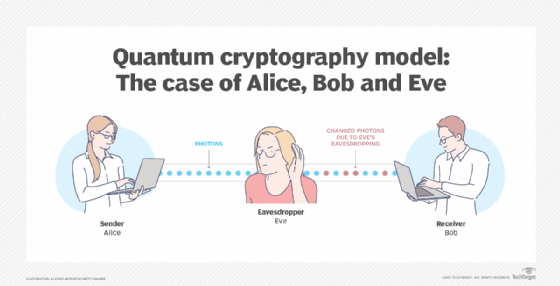
Quantum cryptography is used to protect data and communication networks from potential eavesdroppers. It works by encoding data in a way that is impossible to decrypt without the proper key. The key is generated using a quantum-mechanical phenomenon, such as the phenomenon of entanglement. This ensures that any attempt to intercept the data will be detected, thus making the data secure. Quantum cryptography is used for a variety of applications, including secure communication networks, secure banking systems, and secure data storage.
How does quantum cryptography work?
Quantum cryptography works by encoding data in a way that is impossible to decrypt without the proper key. This is accomplished by using a quantum-mechanical phenomenon such as entanglement. Entanglement is a quantum-mechanical phenomenon in which two particles become “entangled” with each other, meaning that they become linked in such a way that any change in one particle will be reflected in the other. This allows for a secure key to be generated that is impossible to decrypt without the knowledge of the entangled particles.
What are the advantages of quantum cryptography?
The primary advantage of quantum cryptography is that it is much more secure than traditional encryption methods. This is because it is impossible to decrypt the data without the proper key, which is generated using a quantum-mechanical phenomenon. Furthermore, any attempt to intercept the data is immediately detected due to the nature of the entanglement. This makes it extremely difficult for hackers to gain access to the data and makes it the most secure form of encryption available.
What are the disadvantages of quantum cryptography?
The primary disadvantage of quantum cryptography is that it is very expensive and difficult to implement. This is because it requires specialized hardware, such as entangled particles, and also requires a secure communication network. Furthermore, it is difficult to ensure that the data is not intercepted as it is being sent, as it is nearly impossible to detect a potential eavesdropper.
What is the future of quantum cryptography?
The future of quantum cryptography is very promising. As technology advances, it is becoming more feasible to implement quantum cryptography in a variety of applications. This could lead to more secure communication networks, secure banking systems, and even secure data storage. Furthermore, quantum cryptography could be used to protect against quantum computers, which are computers that are capable of breaking traditional encryption methods. In the future, quantum cryptography could become the preferred method for protecting data and communication networks.
In conclusion, quantum cryptography is a revolutionary technology that has the potential to transform the world of cybersecurity. It utilizes the principles of quantum mechanics to create unbreakable encryption that can protect sensitive information from prying eyes. Its applications span across various industries, from banking and finance to healthcare and government.
With the increasing sophistication of cyberattacks, quantum cryptography offers a promising solution to the growing threat of data breaches. As research and development continue, we can expect to see more widespread implementation of quantum cryptography in the years to come. As a professional writer, it is clear that quantum cryptography is a vital tool for safeguarding the security and privacy of our digital world, and its importance cannot be overstated.