Quantum cryptography is a field of study that has been gaining increasing attention in recent years. It is a form of cryptography that relies on the principles of quantum mechanics to provide a level of security that is virtually unbreakable. As we move towards an increasingly digital world, the need for secure communication has become more pressing than ever before. Quantum cryptography is seen as a promising solution to the problem of secure communication, and its potential applications are vast.
At its core, quantum cryptography is based on the idea of using the properties of quantum mechanics to create secure communication channels. The principles of quantum mechanics allow for the creation of a key that is impossible to copy or intercept without being detected. This is achieved by using the properties of quantum particles such as photons to encode information in a way that is inherently secure. While quantum cryptography is still a relatively new field, it has already shown great promise in a wide range of applications, from secure communication between individuals to the protection of sensitive data in government and military settings.
What is Quantum Cryptography Basics?
Quantum cryptography is a field of cryptography which uses quantum mechanics to protect and encrypt data. It is a highly secure form of encryption that provides an extra layer of security to data, as it is based on the principles of quantum mechanics. Quantum cryptography is able to provide higher levels of security than traditional cryptography methods, making it an essential tool for protecting sensitive information.
How Quantum Cryptography Works
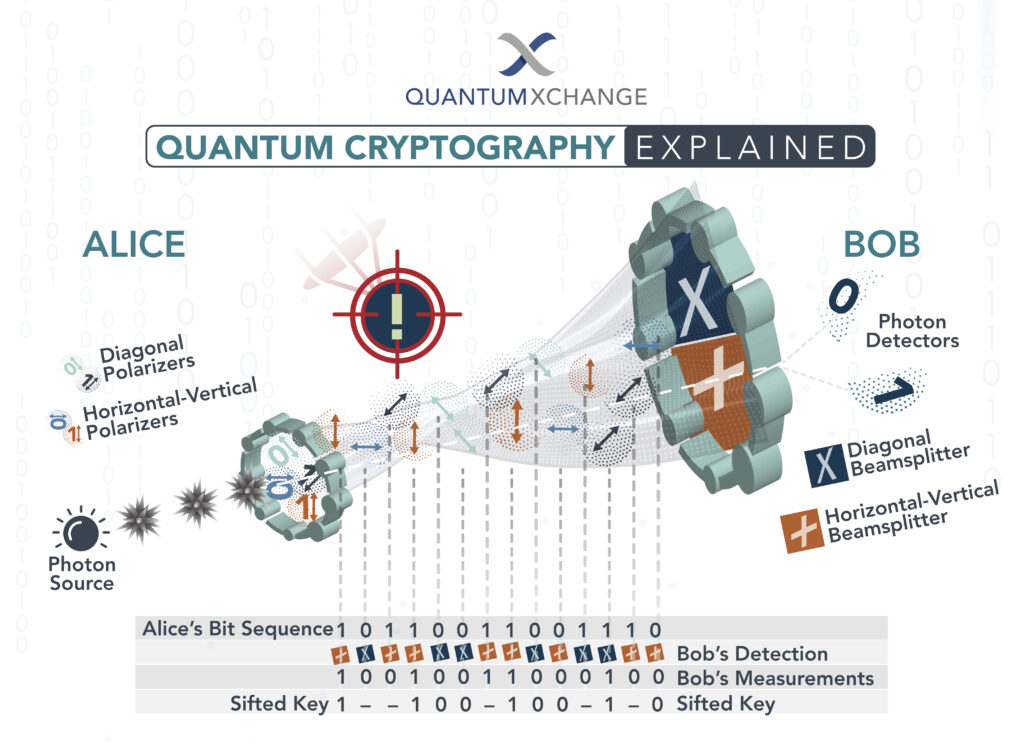
Quantum cryptography works by using the properties of quantum physics to protect data. The process begins with the sender sending out a single photon which is then measured by the receiver. This measurement is used to create a shared key between the sender and receiver, which is then used to encrypt the data. The encryption process is based on the Heisenberg Uncertainty Principle, which states that it is impossible to measure both the position and the momentum of a particle at the same time. This means that if an attacker were to intercept the data, it would be impossible to measure both the position and the momentum of the photon and thus it would be impossible to gain access to the data.
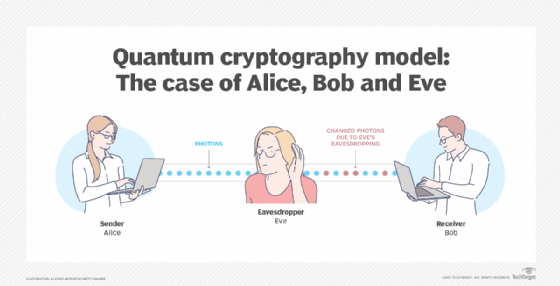
The security of quantum cryptography is further enhanced by the fact that any attempt to intercept the data is detectable. This is due to the fact that when an attacker attempts to measure the photon, it changes the state of the photon and the receiver is then able to detect this change. This means that any attempt to intercept the data is immediately detected, ensuring that the data remains secure.
Advantages of Quantum Cryptography
Quantum cryptography has several advantages over traditional cryptography methods. Firstly, it provides higher levels of security than other methods as it is based on the principles of quantum mechanics. It is also much faster than traditional methods as the process of encrypting and decrypting data is much quicker. This makes it ideal for applications where speed is of the essence.
Another advantage of quantum cryptography is that it is more robust than traditional methods. This is because any attempt to intercept the data is immediately detectable, ensuring that the data remains secure. Finally, quantum cryptography is much more difficult to crack than traditional methods, making it a highly secure form of encryption.
Disadvantages of Quantum Cryptography
Quantum cryptography has some disadvantages which must be taken into consideration. Firstly, it is much more expensive to implement than traditional methods due to the high cost of the equipment required. Additionally, quantum cryptography is much more complex than traditional methods, making it more difficult to understand and implement. Finally, quantum cryptography is only suitable for certain types of applications and is not suitable for all types of data.
In conclusion, quantum cryptography is a highly secure form of encryption which is based on the principles of quantum mechanics. It provides higher levels of security than traditional methods and is much faster. However, it is also much more expensive to implement and is only suitable for certain types of applications.
Frequently Asked Questions: Quantum Cryptography Basics
Quantum cryptography is a form of cryptography that uses the principles of quantum mechanics to protect data. It is an emerging field that has the potential to revolutionize the way we secure communications and data.
What is Quantum Cryptography?
Quantum cryptography is a form of cryptography that uses the principles of quantum mechanics to protect data. It is based on the idea that the quantum properties of particles can be used to create secure communication channels. The main principle behind quantum cryptography is that if an eavesdropper attempts to intercept a quantum message, the act of measuring it will introduce changes that are detectable to the sender and receiver. This makes quantum cryptography a very secure form of communication.
Essentially, quantum cryptography works by encoding data into a sequence of qubits, or quantum bits. These qubits are then sent over a quantum channel, where each qubit represents a single bit of data. The sender and receiver can then decode the qubits to extract the information. As the qubits travel, any attempt to measure them will cause them to become corrupted, which is detectable to the sender and receiver.
How Does Quantum Cryptography Differ From Traditional Cryptography?
Traditional cryptography relies on mathematical algorithms to encode and decode messages. However, these algorithms can be broken by computers with enough processing power. Quantum cryptography, on the other hand, relies on the principles of quantum mechanics to encode and decode data. This makes it much harder to break, as any attempt to measure the qubits will be detectable by the sender and receiver.
Furthermore, traditional cryptography is vulnerable to attacks such as brute force and dictionary attacks. These types of attacks are not possible with quantum cryptography, since the qubits cannot be measured without corrupting them. This makes quantum cryptography much more secure than traditional cryptography.
What Are the Advantages of Quantum Cryptography?
The main advantage of quantum cryptography is its security. The qubits cannot be measured without corrupting them, making it much more secure than traditional cryptography. Furthermore, quantum cryptography is much more efficient than traditional cryptography, as it can transmit data much more quickly. This makes it ideal for use in applications such as online banking and secure communication.
Another advantage of quantum cryptography is its resistance to attacks such as man-in-the-middle attacks. These attacks are not possible with quantum cryptography, as any attempt to measure the qubits will be detectable by the sender and receiver. This makes it much more secure than traditional cryptography.
What Are the Disadvantages of Quantum Cryptography?
The main disadvantage of quantum cryptography is its cost. The equipment needed to transmit and receive quantum messages is expensive and not widely available. Additionally, quantum cryptography requires specialized knowledge and expertise to set up and maintain. This can make it cost-prohibitive for many organizations.
Another disadvantage of quantum cryptography is its limited range. The qubits used for quantum cryptography can only travel a short distance, which limits the range of communication. Furthermore, the qubits may be affected by environmental factors, such as temperature and humidity, which can make the transmission less reliable.
What Are Some Examples of Quantum Cryptography?
Quantum cryptography is being used in a variety of applications, from banking to secure communication. One example of quantum cryptography is the Quantum Key Distribution (QKD) protocol, which is used for secure communication over a quantum channel. Another example is Quantum Encryption, which is used to securely store data and protect it from unauthorized access. Finally, Quantum Signatures are being used to authenticate users and prevent fraud.
In conclusion, quantum cryptography is a revolutionary technology that ensures secure communication by leveraging the laws of quantum mechanics. The use of quantum cryptography has the potential to revolutionize the way we communicate, and it has already found its way into several applications such as secure communication channels for online banking and military communication systems.
As the technology continues to evolve, we can expect to see even more applications of quantum cryptography in the future. With the rapid growth of cyber threats, strong and secure encryption is more important than ever before. Quantum cryptography provides a promising solution to this problem, and it is likely to play a significant role in securing our digital world for years to come. As such, it is essential for everyone to have a basic understanding of quantum cryptography and its potential impact on our lives.